
Table of Contents
The Best Desk Lamps for Home Offices: A Practical Guide for Beginners
Lighting is one of the most overlooked elements in a home office. Many people rely entirely on overhead lighting, only to experience eye strain, headaches or fatigue during longer work sessions.
A well-chosen desk lamp improves visual comfort, reduces glare and supports sustained focus throughout the day. In a complete home office setup, lighting works alongside your desk and chair to create a workspace that feels balanced rather than harsh or tiring.
This guide explains what makes a desk lamp suitable for a home office, how to choose one for your space and how task lighting supports comfort and productivity over time.
Why Desk Lighting Matters More Than You Think
Overhead lighting alone often creates uneven brightness and shadows across your workspace. This forces your eyes to constantly adjust, especially when moving between screen and paper tasks.
According to the Cleveland Clinic, poor lighting and screen glare are common contributors to digital eye strain which can cause fatigue, headaches and blurred vision during prolonged computer use.
A desk lamp helps create focused, controlled light exactly where you need it.
Core Features of a Good Desk Lamp
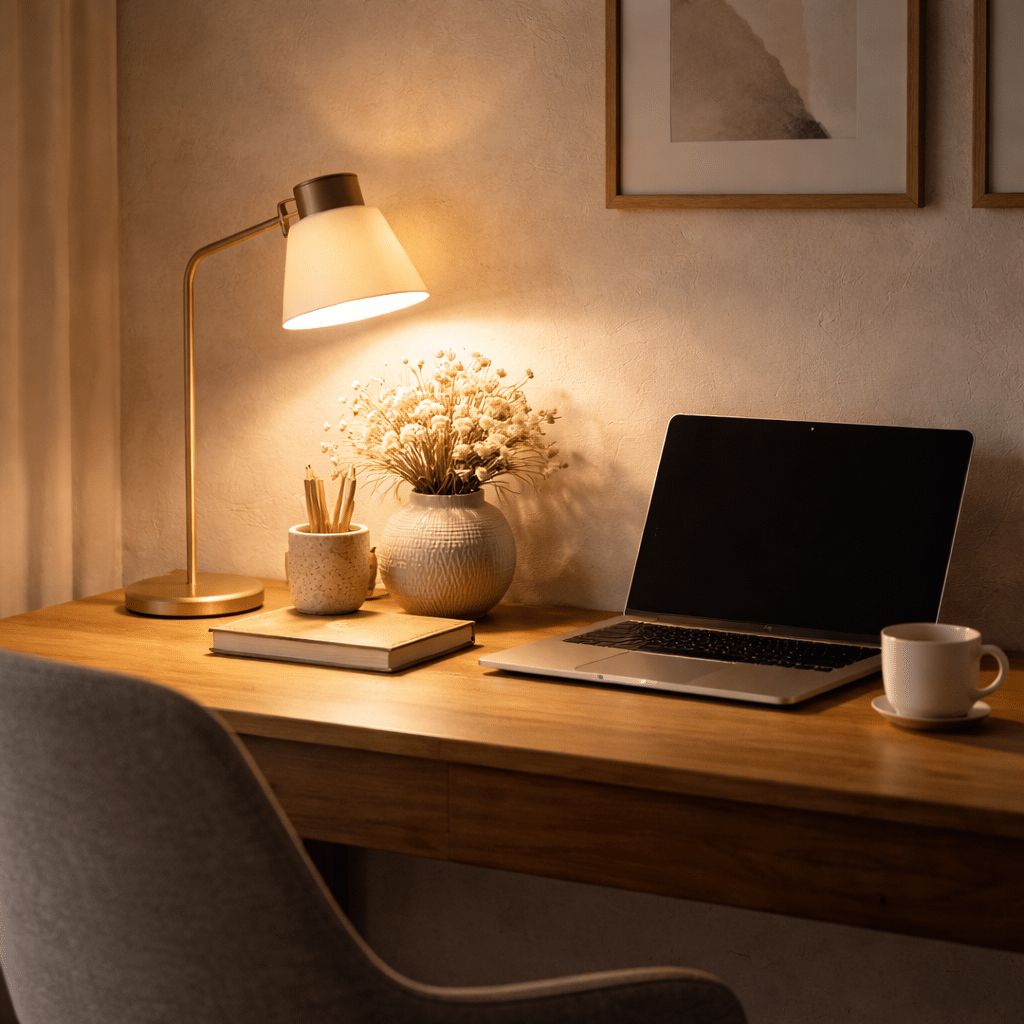
Adjustable Brightness
Dimmable lamps allow you to adapt lighting throughout the day. Morning light needs are different from evening needs.
Adjustable Arm or Head
Flexible positioning helps reduce glare and shadows, especially if you write by hand or reference physical documents.
Colour Temperature
Warm light feels softer and more relaxed. Cooler light supports alertness. Adjustable colour temperature provides flexibility for different tasks.
The American Academy of Ophthalmology recommends reducing glare and adjusting lighting levels to support eye comfort when working on digital devices.
Layered Lighting Explained: Why One Light Source Isn’t Enough
Many home offices rely on a single overhead light or one desk lamp. While this might seem sufficient, relying on one light source often creates uneven brightness and contrast across your workspace.
A well-balanced home office typically uses three layers of light:
Ambient lighting
This is your general room lighting. It prevents harsh contrast between your screen and the surrounding space.
Task lighting
Your desk lamp falls into this category. It provides focused illumination for reading, writing or detailed work.
Accent lighting (optional)
Soft background lighting can reduce visual fatigue by gently illuminating darker areas of the room.
When only one type of lighting is used, your eyes constantly adjust between bright and dark areas. Layered lighting reduces this strain and creates a more comfortable visual environment.
Even in smaller spaces, combining a desk lamp with soft ambient lighting can significantly improve comfort during long work sessions.
Desk Lamps for Small Spaces
In compact home offices:
- Choose slim-profile lamps
- Avoid bulky bases
- Consider clamp or wall-mounted designs
- Keep wiring minimal
These pair naturally with layouts discussed in small home office setup ideas for apartments.
Desk Lamps for Larger Spaces
In larger rooms:
- Combine task lighting with ambient lighting
- Use layered lighting rather than a single bright source
- Ensure light balance across wider desks
Desk lamps should complement, not overpower the room.
Common Desk Lighting Mistakes
- Placing lamp directly behind the screen
- Using only overhead lighting
- Choosing overly bright bulbs
- Ignoring glare reflection
- Positioning lamp on wrong side (causing hand shadows)
Small adjustments often solve most lighting discomfort.
Lighting Based on How You Work
The ideal desk lamp setup depends on the type of work you do.
If You Work Mostly on a Screen
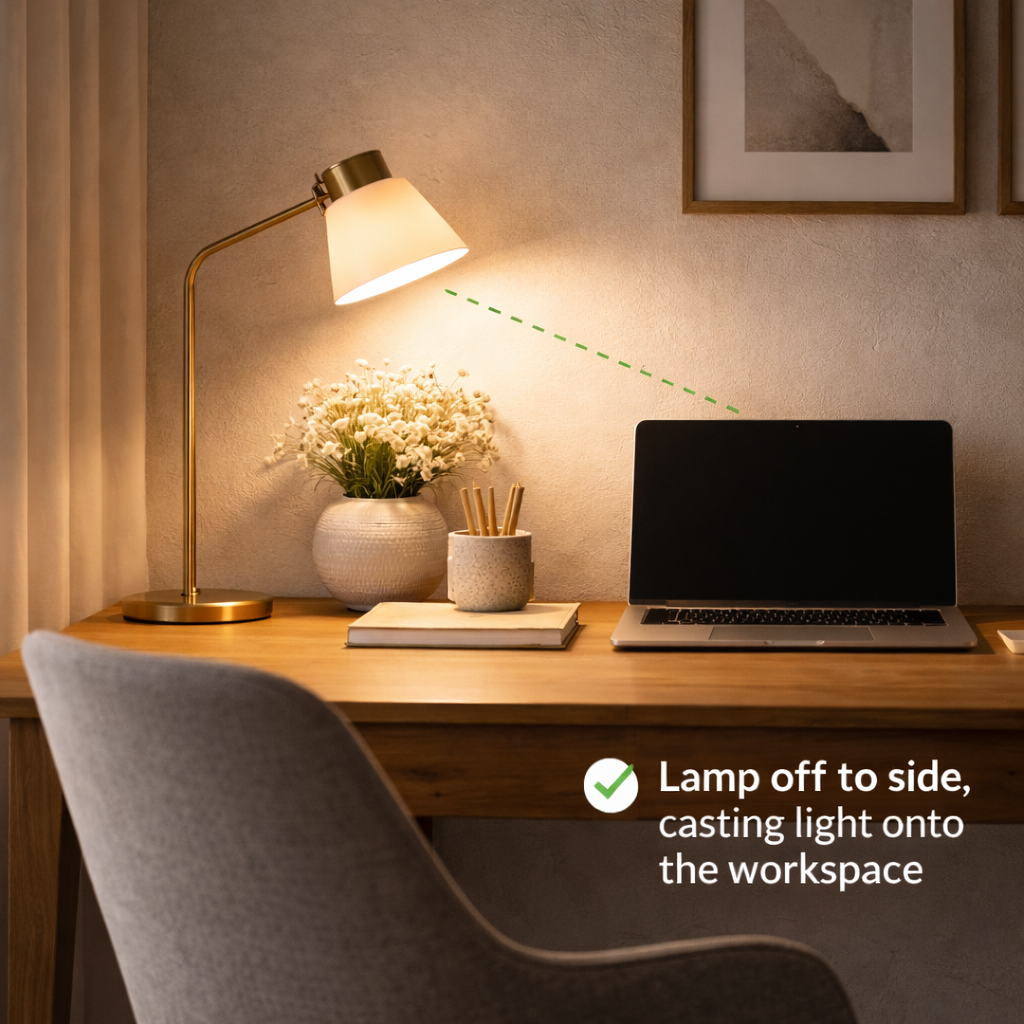
Prioritise glare reduction. Position your lamp to the side of your screen and avoid placing it directly behind or in front of the monitor. Balanced brightness between the screen and surrounding area helps reduce eye strain.
If You Frequently Write by Hand
Position your lamp opposite your dominant hand to prevent shadows while writing. Adjustable arms are especially useful here.
If You Work in the Evenings
Warm light can feel more comfortable later in the day, while cooler light supports alertness earlier on. Lamps with adjustable colour temperature allow you to shift between these modes as needed.
Lighting that matches your work rhythm helps maintain focus without overstimulating your eyes.
How Proper Lighting Supports Focus
Comfortable lighting reduces visual strain. When your eyes aren’t working overtime to adjust to glare or harsh contrast, mental energy lasts longer.
Reducing glare and improving task lighting helps maintain concentration during extended desk work sessions.
Frequently Asked Questions
What is the best brightness for a desk lamp?
Brightness should be adjustable. Dimmable lamps allow you to tailor light levels depending on time of day and task type.
Should a desk lamp be warm or cool?
Cooler light supports alertness during focused tasks. Warmer light feels more relaxed. Adjustable colour temperature is the preference for a desk lamp as it offers flexibility depending on time of day and your mood.
Where should a desk lamp be placed?
Position the lamp opposite your dominant hand to prevent casting shadows while writing. Avoid placing it directly behind or in front of your screen.
Can a desk lamp reduce eye strain?
Yes. Properly positioned task lighting reduces glare and uneven contrast, which are common contributors to eye fatigue.
Is overhead lighting enough for a home office?
Usually not. Overhead lighting alone often creates shadows and glare. Layered lighting works better.
How This Fits Into Your Overall Home Office Setup
Lighting works best when considered alongside desk height, chair position and screen placement. A desk lamp is not just an accessory — it’s part of the ergonomic system explained in our home office setup guide, where seating, surfaces and lighting function together.
Final Thoughts
The best desk lamp for a home office is one that supports your eyes without drawing attention to itself. Good lighting feels effortless. It reduces strain, supports focus and helps your workspace feel calm rather than clinical.
Thoughtful lighting is a small change that can make a noticeable difference over time.