
Table of Contents
Minimalist Storage Ideas That Actually Work
Minimalist storage isn’t about hiding clutter.
It’s about creating systems that prevent clutter from returning in the first place.
If you’ve already started to declutter your home, you may have realised something important: removing excess is only step one. What keeps your home simple long term is how you store what remains.
This guide explores minimalist storage ideas that are functional, realistic and sustainable, not aesthetic trends that look good for a week.
If you’re new to the philosophy behind this approach, start with our Home Minimalism 101 guide, which explains how simplicity works at a structural level.
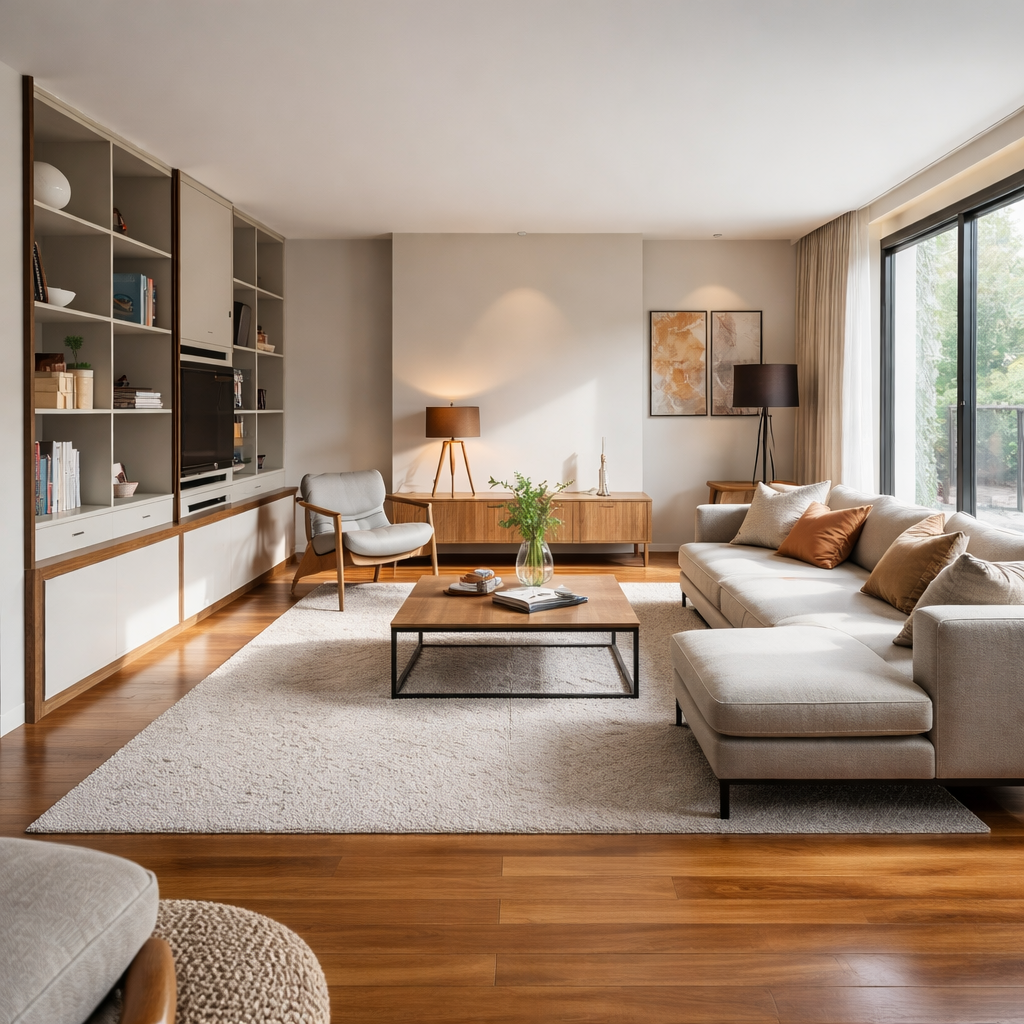
Why Most Storage Solutions Fail
Storage fails when it:
- Adds more containers without reducing items
- Encourages “out of sight, out of mind” behaviour
- Prioritises aesthetics over accessibility
- Doesn’t match daily routines
Research in Frontiers in Psychology shows that clutter management relies heavily on executive function and decision-making capacity. When systems are overly complex, people are less likely to maintain them consistently.
Minimalist storage works because it reduces cognitive load.
Step 1: Store by Frequency, Not Category
Instead of grouping items by type, group them by how often you use them.
Daily-use items → easy access
Weekly-use items → secondary access
Rare-use items → concealed or higher storage
This principle mirrors how we structure space in our home office setup guide, where desk tools are positioned based on frequency, not appearance.
When storage reflects behaviour, maintenance becomes effortless.
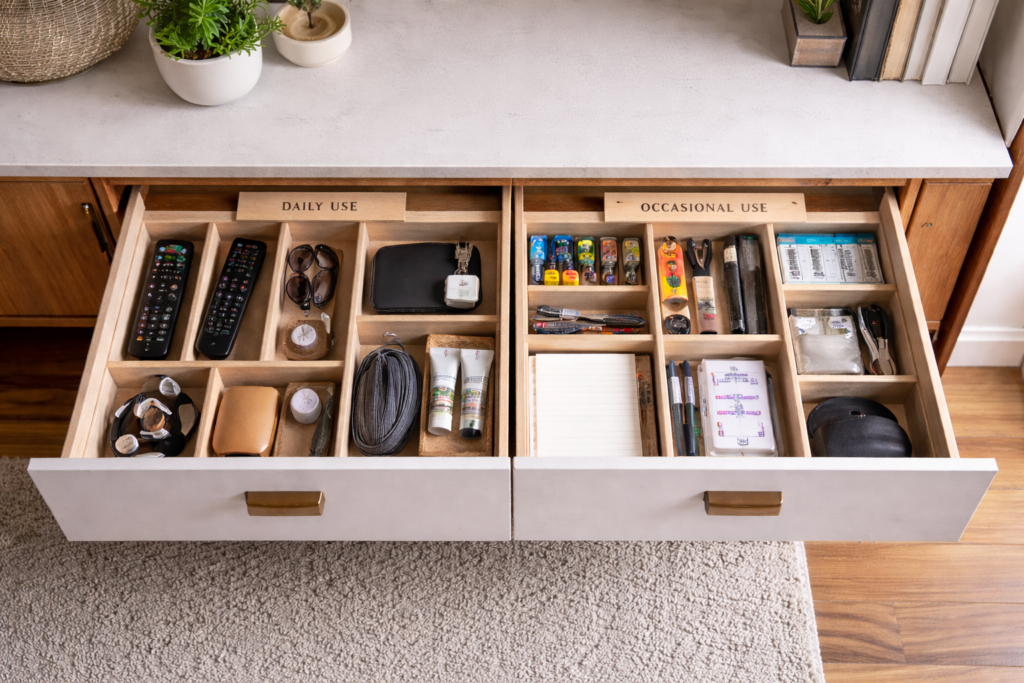
Step 2: Use Closed Storage Strategically
Open shelving looks minimalist, until it isn’t.
Visual clutter increases cognitive load. Closed storage in high-traffic areas reduces visual noise.
Closed storage:
- Reduces visual clutter
- Limits overstimulation
- Encourages intentional display
Research published in Psychological Science found that orderly physical environments influenced more structured behavioural responses compared to disorderly settings, suggesting that visually organised spaces may support clearer and calmer cognitive processing.
The goal is not hiding everything, it’s reducing visual friction.
Step 3: Create Visible Limits
Buying more bins often signals that you own too much.
Minimalist storage ideas rely on boundaries.
Before purchasing storage:
Ask:
- Am I storing or avoiding decisions?
- Could I remove more instead?
As discussed in How To Declutter Your Home Without Regret, reduction should always precede organisation. Minimalist storage ideas only work when volume is controlled. When space fills, something must leave. As discussed in Intentional Buying, preventing overflow is more effective than reorganising it.
Defined limits prevent slow accumulation.
Step 4: Choose Multi-Functional Furniture
Smart minimalist storage integrates into furniture:
- Bed frames with drawers
- Ottomans with hidden compartments
- Desks with concealed cable management
- Coffee tables with internal storage
This approach is especially powerful in smaller spaces. Our guide on small home office setup ideas for apartments demonstrates how thoughtful layout prevents storage overload.
When furniture carries function, extra containers become unnecessary.
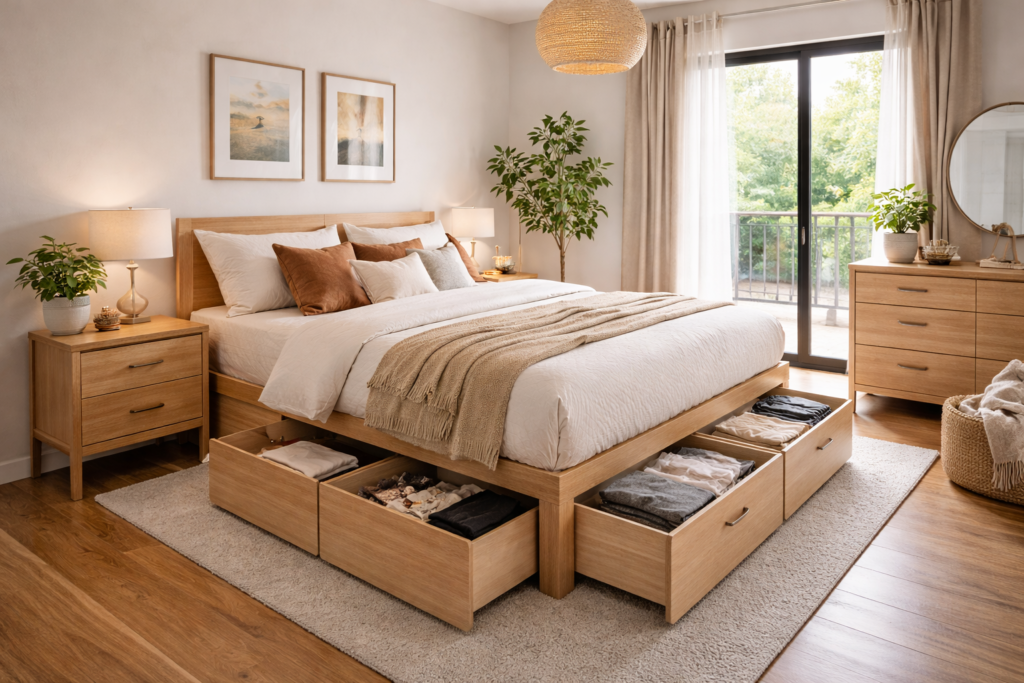
Step 5: Create “Return Zones”
Minimalist homes stay organised because everything has a clear return point.
Examples:
- A basket near the door for daily essentials
- A drawer for tech accessories
- A tray for mail
- A single shelf for current reading material
Research examining how environmental disorder affects self-regulation suggests that disorganised spaces can undermine self-control and behavioural consistency. Conversely, when an environment is orderly and structured, people are more likely to maintain habits and carry out tasks with less internal resistance, which supports long-term behaviour patterns.
If returning an item requires thought, the system is too complex.
Step 6: Avoid Over-Optimising
Some minimalist systems fail because they become overly precise. Colour-coded labels, hyper-specific containers and elaborate sorting methods often increase maintenance time rather than reduce it.
Simple systems survive busy weeks.
Simplicity supports sustainability.
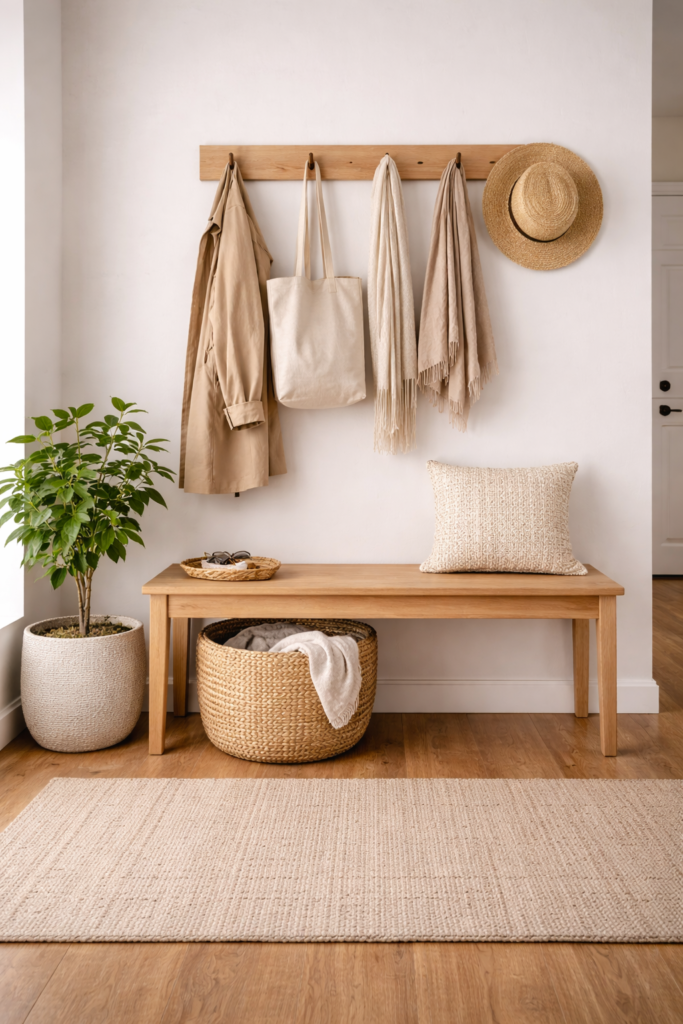
Storage in Small Spaces
In small homes:
- Vertical storage is powerful
- Wall-mounted shelves free floor space
- Slim cabinets reduce visual weight
- Under-bed storage must be limited and intentional
Clutter in small areas magnifies quickly. That’s why structure matters more than volume.
When storage aligns with layout, not just possessions, your home feels larger without changing interior space.
Storage vs. Concealment
Minimalist storage is not about hiding chaos.
If drawers are crammed, the problem isn’t visibility, it’s volume.
The sequence should always be:
- Reduce
- Simplify
- Store intentionally
Never reverse that order.
Common Minimalist Storage Mistakes to Avoid
Even well-intentioned storage systems can fail if they’re built on the wrong foundation.
Buying Containers Before Reducing Volume
One of the biggest minimalist storage mistakes is buying organisers before decluttering. Storage products can create a false sense of progress. As explained in How To Declutter Your Home Without Regret, reduction must come before organisation.
Minimalist storage ideas work only when volume is already controlled. Storage should follow decluttering, not replace it.
Over-Complicating the System
If you need labels for every drawer and sub-category, maintenance will eventually break down.
Storing Based on Appearance Instead of Behaviour
Minimalist homes function best when storage reflects daily habits, not design trends.
Creating Hidden Clutter
A closed drawer filled with random items is still clutter, it’s just concealed.
Trying to Optimise Everything at Once
Sustainable storage systems evolve gradually.
Frequently Asked Questions
What is minimalist storage?
Minimalist storage focuses on reducing excess items first, then creating simple, low-maintenance systems for what remains.
How do I avoid buying too many storage containers?
Declutter before purchasing. Storage should serve your lifestyle, not compensate for over-accumulation.
Are open shelves bad for minimalist homes?
Not necessarily, but they require strict limits to avoid visual clutter.
What’s the best storage strategy for small homes?
Multi-functional furniture combined with closed storage and vertical organisation.
Final Thoughts
Minimalist storage ideas work when they are:
- Behaviour-based
- Low maintenance
- Volume-controlled
- Visually calming
If your home feels organised but still stressful, the system may be too complicated.
Storage should reduce effort, not increase it.
When reduction and structure work together, simplicity becomes sustainable.