
Table of Contents
How To Declutter Your Home Without Regret
If you want to declutter your home but feel nervous about making mistakes, you’re not alone.
Many people delay decluttering because they fear regret — throwing away something valuable, sentimental or expensive. Others begin enthusiastically, only to feel overwhelmed halfway through.
Learning how to declutter your home properly isn’t about being extreme. It’s about reducing clutter carefully so your space becomes calmer, more functional and easier to maintain.
This guide shows you how to simplify your home confidently, without second-guessing your decisions later.
Why People Regret Decluttering Their Home
Regret usually happens when decisions are rushed.
Most mistakes fall into three patterns:
- Removing items too quickly
- Decluttering emotionally instead of practically
- Confusing minimalism with deprivation
As explained in our Home Minimalism 101 guide, home minimalism focuses on function, not emptiness.
Decluttering your home without understanding your routines can create imbalance. Thoughtful reduction prevents that.
The Psychological Weight of a Cluttered Home
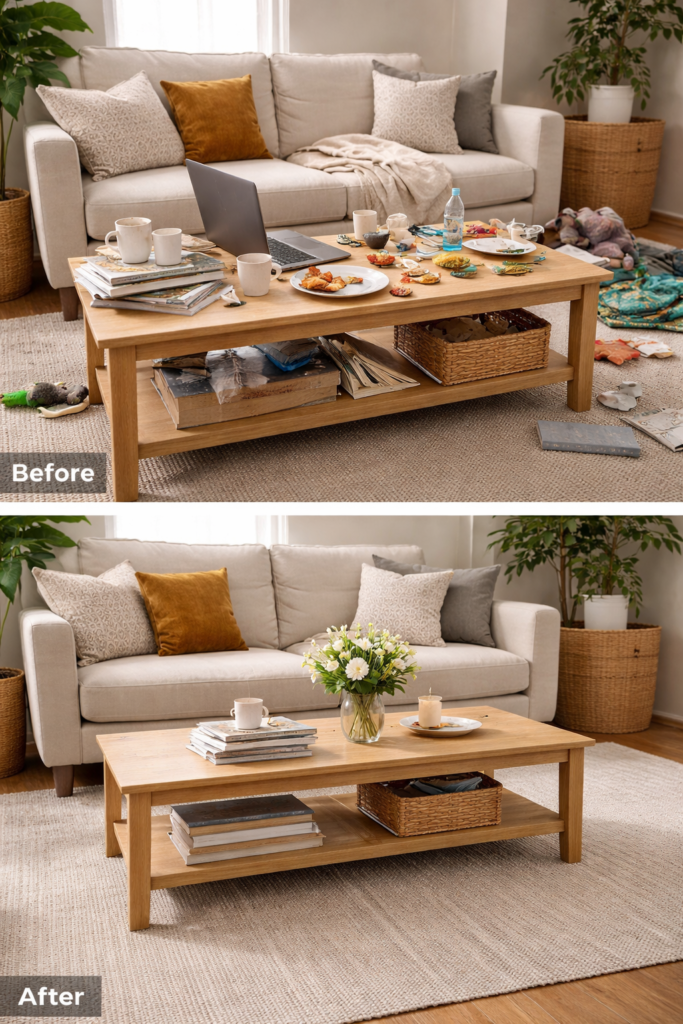
A cluttered home affects more than appearance.
Research examining household environments found that people who described their homes as cluttered showed higher levels of cortisol, the body’s primary stress hormone. This connection between household clutter and cortisol levels suggests that disorganisation increases stress.
Beyond stress, clutter also makes decision-making harder. A paper in Frontiers in Psychology (free full text on PubMed Central) explains that clutter management relies on cognitive processes like decision-making and taking action. When these are strained, it becomes harder to initiate and follow through with decluttering tasks.
By simplifying your space, you decrease visual noise and mental fatigue.
Step 1: Start Small When You Declutter Your Home
If you begin with sentimental belongings, you’ll likely stall.
Instead, start with:
- Expired products
- Broken items
- Duplicates
- Unused packaging
- Obvious trash
Small wins build confidence and momentum.
Step 2: Identify Friction Before Removing Items
Instead of asking “Do I love this?”, ask:
- Does this support how I actually live?
- Do I use this regularly?
- Does this create friction?
Friction is a better filter than emotion.
This big-picture approach is the same one we use in our home office setup guide, where furniture, storage and lighting are planned together, not piece by piece.
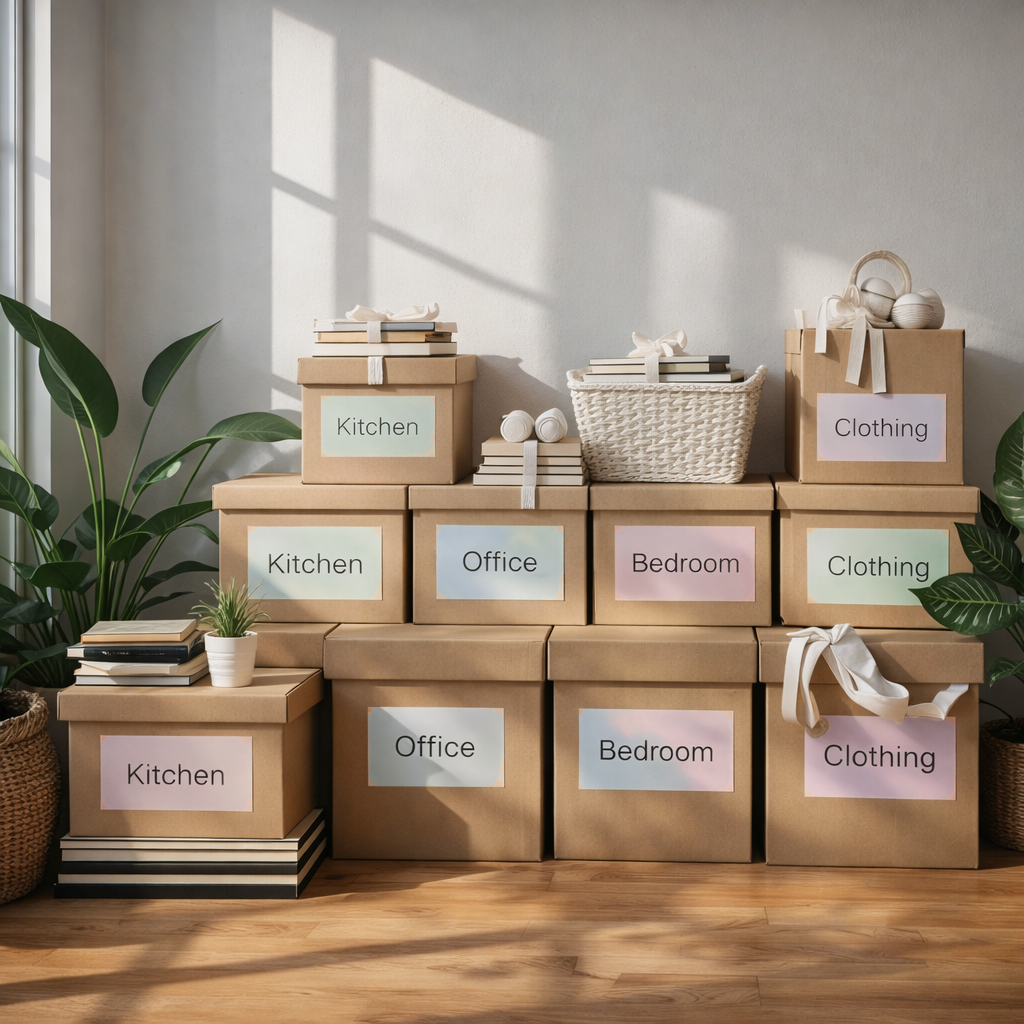
Step 3: Use the Pause Box Method to Declutter Without Regret
One reason people hesitate to declutter their home is fear of permanence — the worry that once something is gone, they might regret it later.
The Pause Box method removes that pressure:
- Place uncertain items in a box
- Label it with a review date
- Store it out of sight
- Revisit it in 30–60 days
If you don’t need the item during that period, letting it go becomes easier.
This method encourages intentional living rather than cleaning out on impulse.

Step 4: Separate Sentiment From Storage
Sentimental items are often the hardest to reduce.
Instead of removing everything, consider:
- Keeping one representative item
- Digitising important documents
- Displaying meaningful pieces intentionally
Erika Penney, Lecturer in Clinical Psychology at the University of Technology Sydney, explains in The Conversation how many people experience a messy home as a trigger for stress and anxiety. This helps clarify why decluttering can feel emotionally heavy, even before any decisions are made about what to keep or remove.
Selecting and organising meaningful items instead of storing them randomly reduces clutter without erasing memory.
Step 5: Prevent Re-Cluttering After You Declutter Your Home
Decluttering once is not enough if purchasing habits remain unchanged.
Before bringing something new into your home, ask:
- Does this replace something?
- Does this solve a recurring problem?
- Will it remain useful next year?
Research published in Psychological Science found that physically orderly environments influence more structured and disciplined behavioural choices compared to disorderly spaces, suggesting that organised environments can support clearer decision-making patterns.
An organised environment supports consistent habits.
You can see how we apply this mindset to purchasing decisions on our Recommended Products page.
Decluttering in Small Spaces
Small homes amplify clutter.
Limited square footage magnifies:
- Poor layout decisions
- Excess belongings
- Inefficient storage
If you live in an apartment, our guide on small home office setup ideas for apartments demonstrates how thoughtful placement improves practicality. The same logic applies when you declutter your home.
Reducing clutter increases perceived space and improves flow, especially in smaller spaces.

Common Decluttering Mistakes
Decluttering Everything at Once
This causes burnout and regret.
Comparing Yourself to Minimalist Influencers
Your home should reflect your life, not trends.
Hiding Instead of Removing
Buying storage without reducing items creates imbalance.
Treating Decluttering as a One-Time Event
Home minimalism is a system, not a weekend task.
How Decluttering Connects to Home Minimalism
Decluttering removes excess.
Home minimalism improves what remains.
When furniture, layout, storage and lighting work together, your home becomes easier to maintain and more comfortable to live in.
Reducing clutter is the foundation, but designing systems is what sustains simplicity.
Frequently Asked Questions
How do I declutter my home without regret?
Start with low-risk items, work gradually and use a pause box for uncertain belongings.
How long should it take to declutter your home?
Work in small sessions over time. Consistency matters more than speed.
Is decluttering the same as minimalism?
No. Decluttering reduces excess. Minimalism improves long-term functionality.
Can decluttering reduce stress?
Yes. Research links cluttered environments with increased stress and reduced focus.
Final Thoughts
To declutter your home without regret, focus on thoughtful reduction, not drastic removal.
When decisions are gradual, intentional and system-based, decluttering becomes less about loss and more about clarity.
Decluttering your home is not about living with less.
It is about living with what works.