
Table of Contents
Home Minimalism 101: Simplify Your Space Without Losing Function
Home minimalism is often misunderstood.
For some, it suggests empty white rooms and strict rules. For others, it feels unrealistic or restrictive. In reality, home minimalism is about simplifying your home in a way that improves function, reduces clutter and supports daily life, without sacrificing comfort or personality.
If your space feels overcrowded, difficult to maintain or inefficient to move through, functional minimalism can help.
This guide explains what home minimalism actually means, why it matters and how to apply it practically.
The Core Principals of Home Minimalism
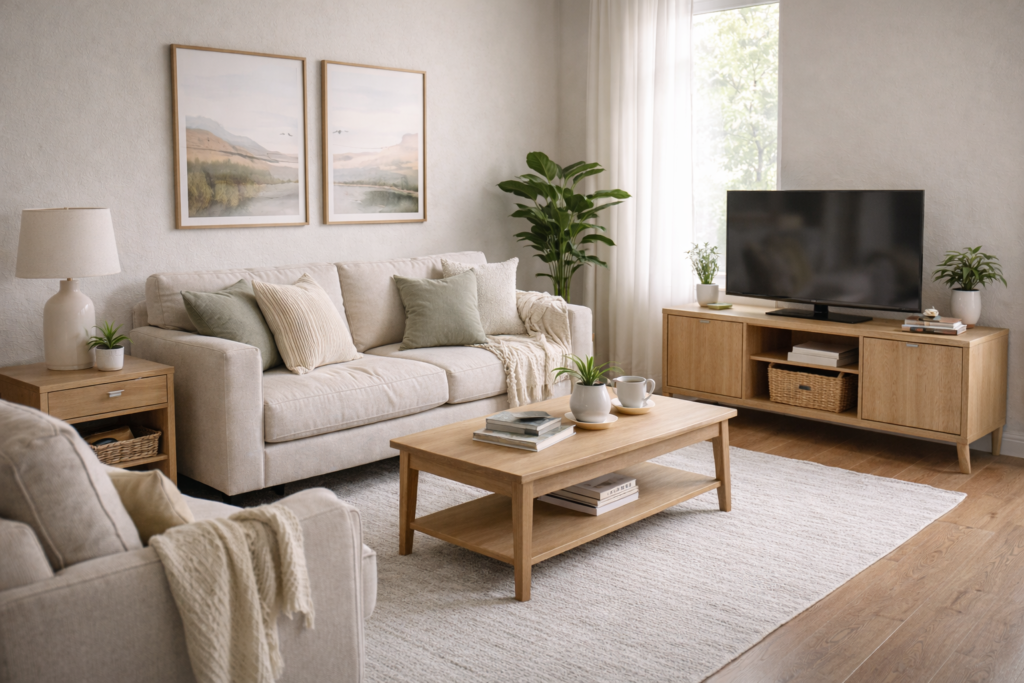
At its core, home minimalism follows five practical principles:
- Reduce visual clutter
- Prioritise function over appearance
- Design minimalist storage intentionally
- Practice intentional living
- Maintain systems regularly
Minimalism is not about having less for the sake of less. It is about removing what creates friction so your home works better.
What Home Minimalism Really Means
A minimalist home is not empty, it is intentional.
It asks:
- Does this item serve a purpose?
- Does it make daily routines easier?
- Does it reduce or increase visual noise?
Minimalism filters out visual noise so your brain processes less at once. Neuroscience research shows that when multiple visual stimuli appear simultaneously, they compete for neural representation in the brain, reducing processing capacity and increasing distraction.
This means clutter isn’t just messy, it creates cognitive strain.
This systems-based thinking mirrors how we approach layout in our home office setup guide, where furniture, lighting and workflow are considered together rather than as isolated decisions.
Functional vs Aesthetic Minimalism
There are two common interpretations of minimalism:
Aesthetic Minimalism
- Neutral palettes
- Sparse décor
- Visually open spaces
Functional Minimalism
- Reduced decision fatigue
- Efficient organisation
- Intentional buying habits
- Simplified routines
While aesthetic minimalism can look calming, functional minimalism improves how your home operates.
Research published in the Journal of Environmental Psychology links cluttered environments to lower well-being and increased stress.
Minimalism becomes sustainable when it improves practicality, not just appearance.
Why Reducing Clutter Matters
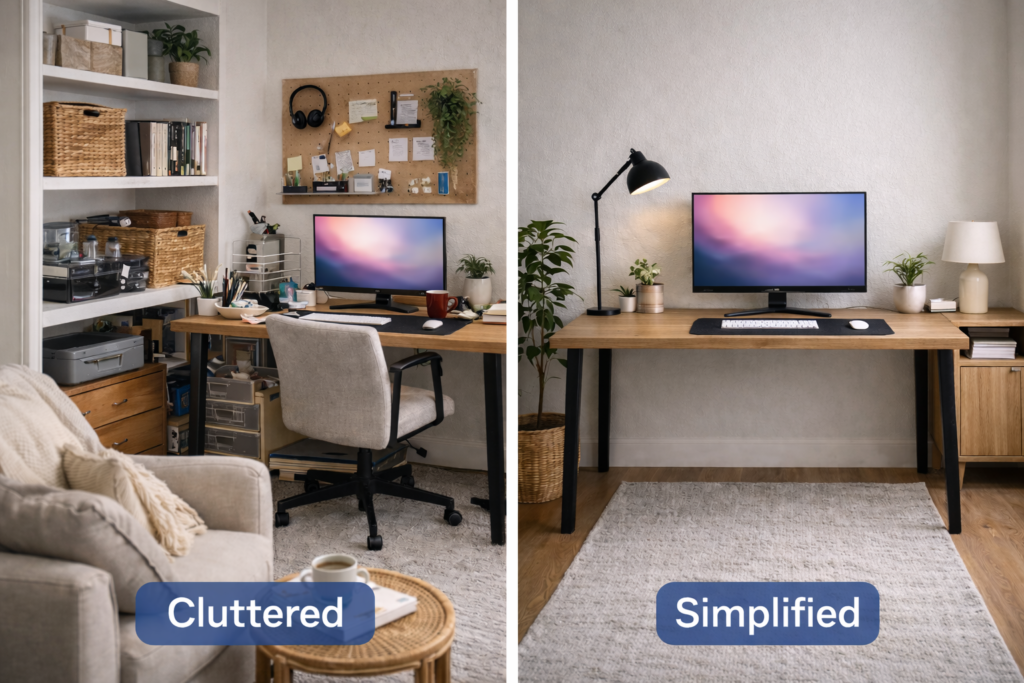
Clutter affects more than appearance.
Research examining household environments found that people who described their homes as cluttered showed higher levels of cortisol, the body’s primary stress hormone. This link between household clutter and cortisol levels suggests that physical environments can directly influence stress responses.
When clutter increases, so can emotional load.
When you reduce clutter intentionally:
- Movement becomes easier
- Cleaning requires less effort
- Visual noise decreases
- Focus improves
Simplifying your home is not about minimal aesthetics, it is about reducing environmental strain.
Why Modern Homes Feel Overwhelming
Modern households accumulate more possessions than ever before.
The UCLA Center on Everyday Lives of Families found how accumulated belongings contribute to stress and overwhelm in daily life, reinforcing the idea that clutter is often tied to lifestyle patterns, not just organisation habits.
Minimalism challenges this pattern by shifting focus from accumulation to intentional living.
It asks: What genuinely improves daily life?
Step 1: Identify Friction Before You Declutter Your Home
Instead of randomly removing items, identify friction points.
Ask:
- Where do I feel overwhelmed?
- What areas are hardest to maintain?
- Where do I constantly rearrange things?
Friction reveals structural inefficiencies, not just clutter.
In smaller spaces, layout decisions have amplified impact. Our guide on small home office setup ideas for apartments demonstrates how strategic layout placement influences comfort more than floor space alone.
The same principle applies across the home.
Step 2: Reduce Before You Replace
Many people invest in storage before decluttering.
Before purchasing organisers:
- Remove duplicates
- Group similar items
- Eliminate unused items
- Re-evaluate decorative excess
Research shows that an orderly environment supports self-control and behavioural persistence compared with disorderly spaces, where visual and organisational chaos can reduce state self-control, especially for people with lower baseline self-control. An orderly space can help increase persistence and reduce distraction, which is a core benefit of a minimalist home design.
Minimising upfront reduces the need for excess storage.
Step 3: Design Minimalist Storage That Works
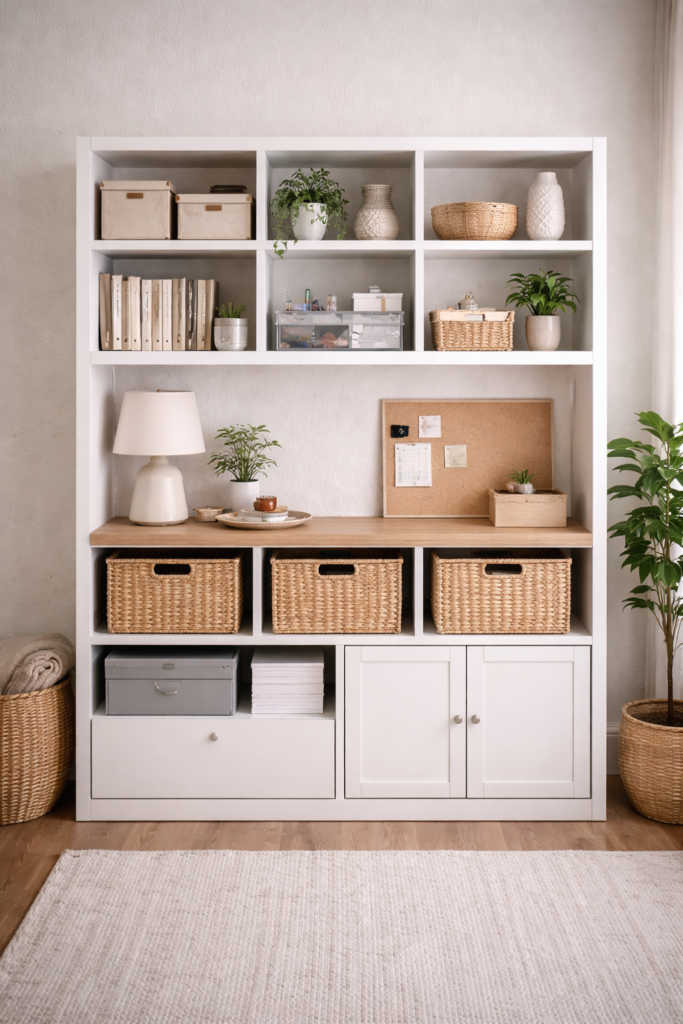
Minimalist storage should:
- Keep essentials accessible
- Hide rarely used items
- Minimise visual clutter
- Remain adaptable
Closed storage often reduces visual stimulation compared to open shelving.
The goal is not hiding everything, it is about deciding less.
Step 4: Practice Intentional Living and Buying
Minimalism is sustained through purchasing habits.
Before adding something new, ask:
- Does this solve a recurring problem?
- Does it replace something inferior?
- Will it remain useful long term?
Research on orderly environments and self-regulation shows that structured spaces can positively influence behavioural persistence and self-control compared with disorderly ones.
An organised environment makes consistent behaviour easier to maintain.
When we recommend products, this philosophy guides our approach — clarity first, purchasing second. You can see how this is applied on our Recommended Products page.
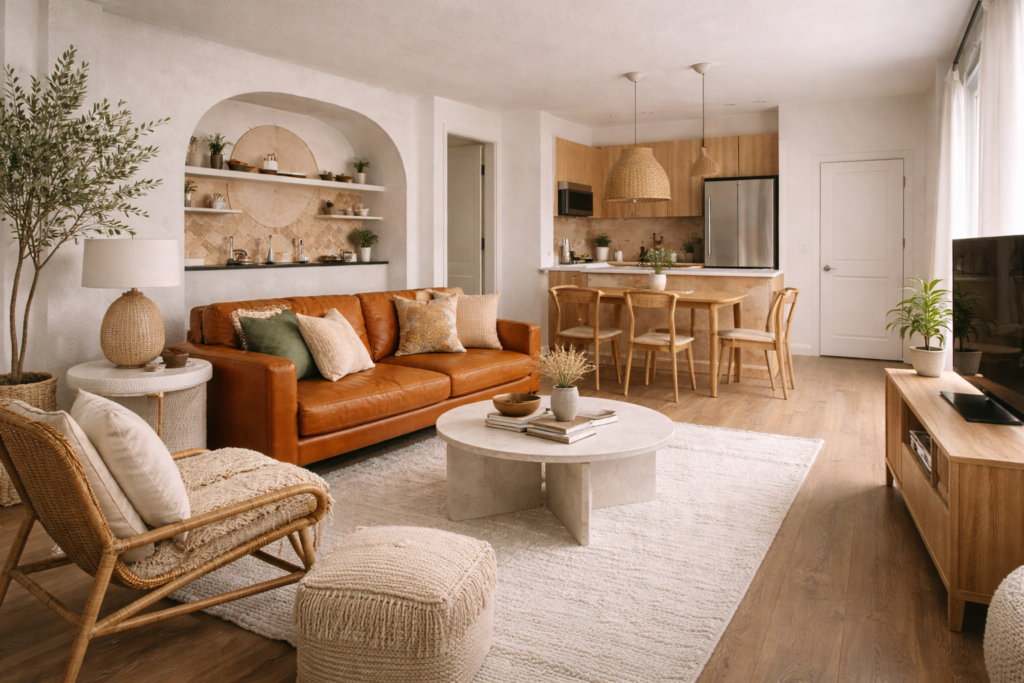
Minimalism in Small Spaces
Minimalism becomes especially powerful in compact homes.
Limited space magnifies:
- Poor layout decisions
- Excess storage
- Visual clutter
Simplifying strategically can:
- Improve perceived spaciousness
- Increase movement flow
- Reduce maintenance time
Minimalism for small spaces is about efficiency, not emptiness.
Common Beginner Mistakes
Decluttering Too Aggressively
Removing useful items can create inconvenience.
Confusing Minimalism With Deprivation
Minimalism is about alignment, not restriction.
Focusing Only on Appearance
Function should guide design decisions.
Changing Everything at Once
Gradual simplification is more sustainable.
How Home Minimalism Supports Productivity
A simplified environment reduces distraction.
Fewer visible objects mean:
- Less mental scanning
- Faster task initiation
- Reduced decision fatigue
- Improved workflow
This is why minimalist principles naturally complement workspace design and intentional routines.
Frequently Asked Questions
What is home minimalism?
Home minimalism is the practice of reducing clutter and designing your home intentionally to improve function and clarity.
How do I start simplifying my home?
Begin by identifying friction points before removing items. Focus on areas that create stress or inefficiency.
Does minimalism mean getting rid of everything?
No. It means keeping what supports your lifestyle and removing what creates friction.
Can minimalism improve productivity?
Yes. Research shows that cluttered environments reduce focus and increase stress, while orderly environments support persistence.
Final Thoughts
Home minimalism is not about living with less for the sake of less.
It is about simplifying your home in a way that improves clarity, comfort and functionality.
When your environment reduces friction instead of creating it, daily life becomes easier to manage.
Minimalism isn’t about having less, it is about feeling more stable.