
Table of Contents
How Minimalism Improves Focus and Productivity at Home
Minimalism is often associated with aesthetics.
White walls. Clear counters. Neutral tones.
But the real benefit isn’t visual, it’s cognitive.
Minimalism improves focus by reducing visual distraction, lowering cognitive load and preserving mental energy. When your home contains fewer competing stimuli, your brain processes information more efficiently.
This is not just preference.
It’s supported by research in neuroscience and environmental psychology.
How Minimalism Improves Focus (Quick Answer)
Minimalism improves focus by:
- Reducing visual competition for attention
- Lowering cognitive load
- Minimising decision fatigue
- Reducing stress triggers
- Creating predictable, structured environments
When environments demand less mental processing, attention becomes more stable and sustained.
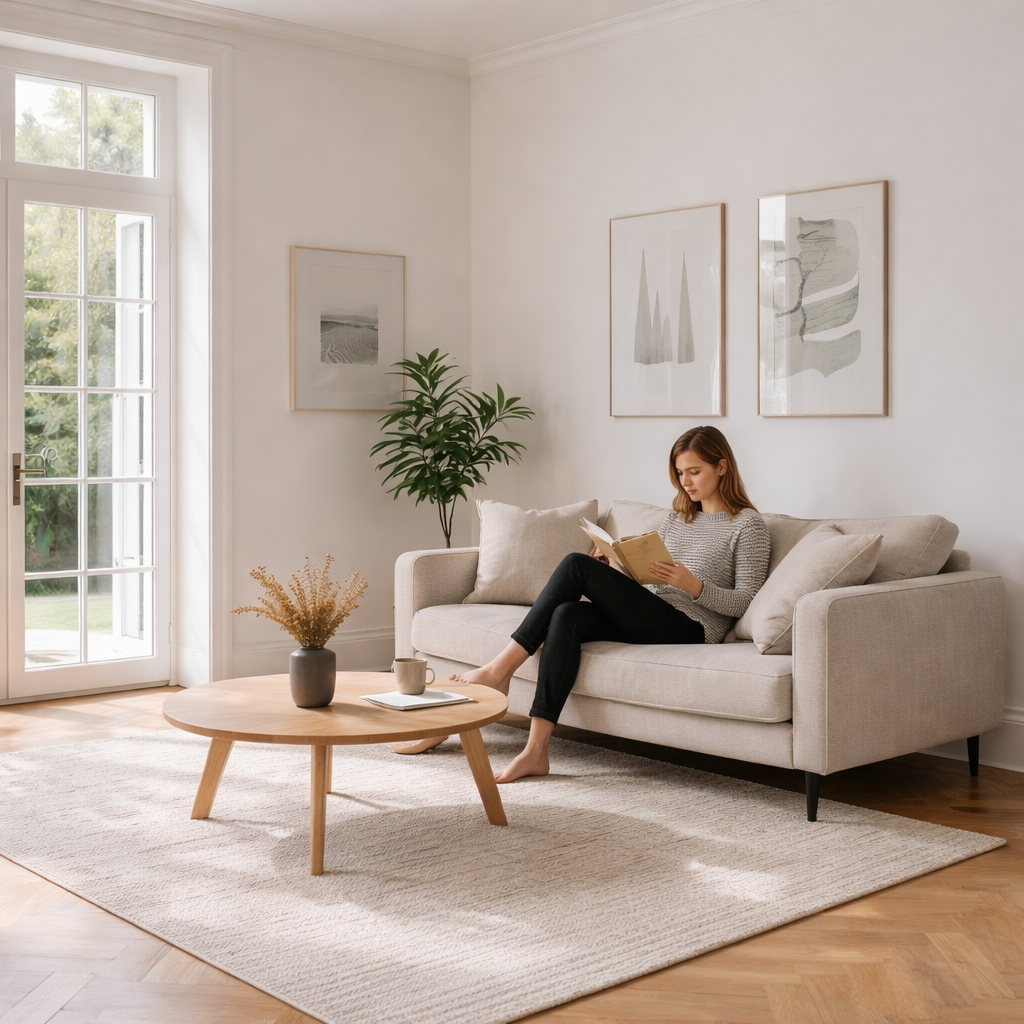
Reduced Visual Clutter Lowers Cognitive Load
Cognitive load refers to the total amount of mental effort being used in working memory.
Research highlighted by Yale University explains that visual clutter can alter information flow in the brain, making it harder to process and prioritise incoming stimuli efficiently. When too many objects compete for attention, the brain must work harder to filter and organise information, reducing available capacity for focused tasks.
In cluttered environments, your brain is constantly filtering irrelevant input.
Minimalism improves focus by lowering the number of competing visual signals, allowing attention to stabilise.
Clutter Increases Stress and Reduces Perceived Control
Peer-reviewed research in environmental psychology has found that residential clutter is associated with elevated stress responses, reduced perceived control and diminished cognitive clarity. These findings indicate that disorganised environments place additional psychological strain on residents, fragmenting attention and interfering with sustained focus.
When stress increases, concentration naturally declines.
Minimalism improves focus indirectly by reducing environmental stress interference.
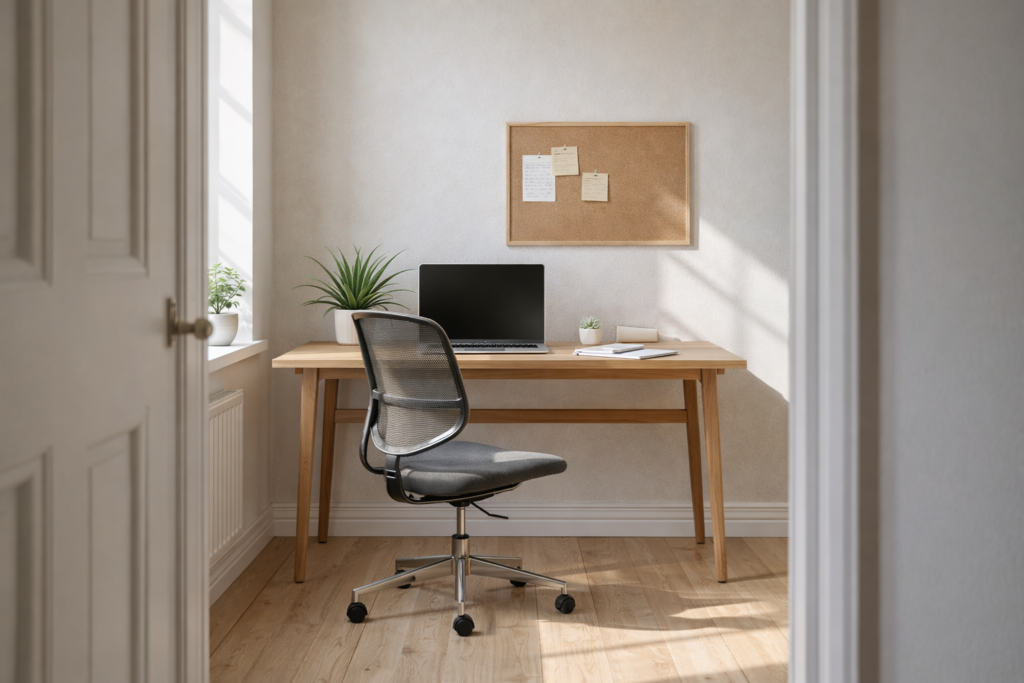
Fewer Decisions Preserve Mental Energy
Decision fatigue is widely recognised in behavioural science. Repeated small decisions reduce the quality of later choices and increase mental exhaustion.
Research conducted by the Department of Mathematics and Information Technology (MIT) at The Education University of Hong Kong examined how choice fatigue affects consumer decision-making. It also found that excessive decision demands can deplete mental resources and impair judgment over time. When individuals are required to make too many consecutive choices, cognitive performance declines and self-regulation weakens.
Every object in your home represents a potential decision.
Minimalism improves focus by removing unnecessary decisions and preserving mental energy for higher-value tasks.
Predictable Environments Strengthen Attention
Research published in the Journal of Experimental Psychology shows that stable environmental cues support automatic behaviour and reduce cognitive strain. When surroundings remain consistent, fewer mental resources are required to initiate and sustain action.
When your home layout remains consistent and uncluttered, your brain expends less energy adapting to changing stimuli.
Minimalism improves focus because predictability lowers mental overwhelm.
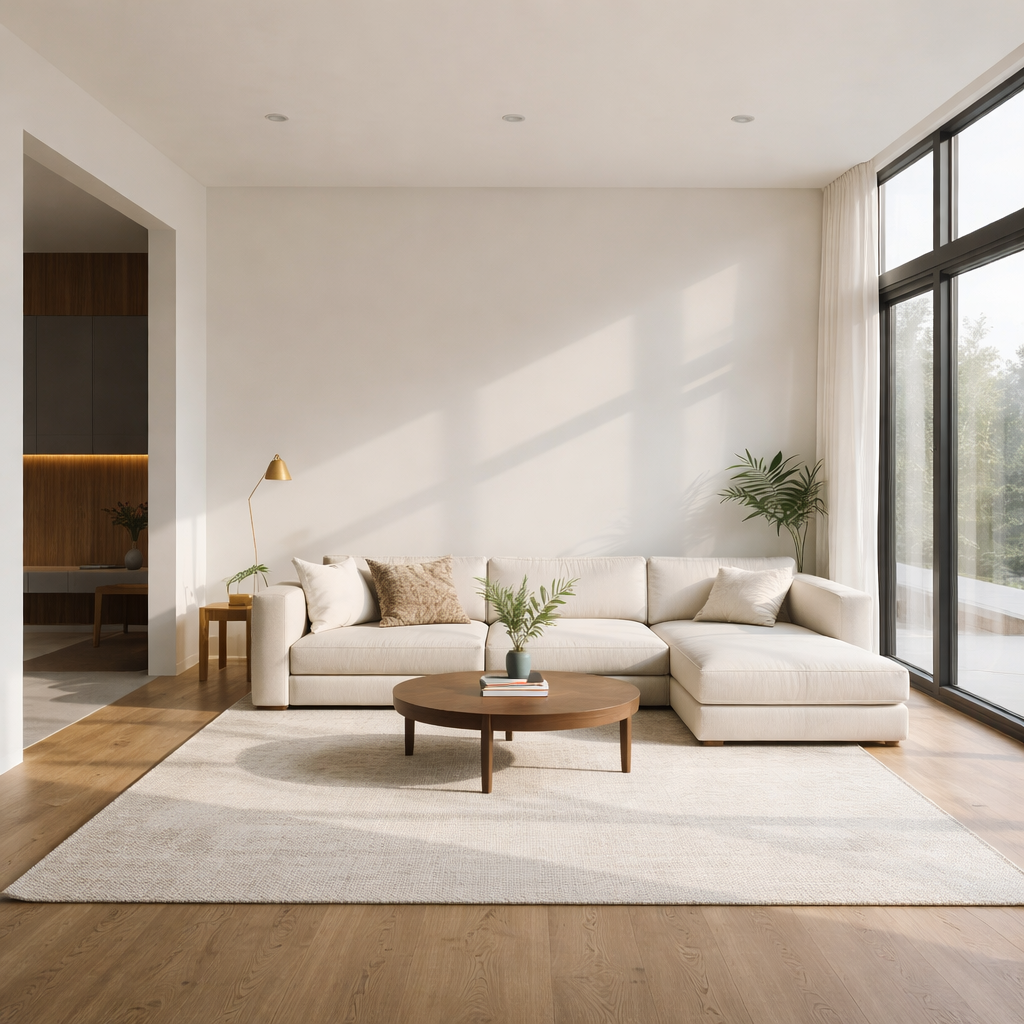
Visual Simplicity Improves Task Initiation
Starting a task is often the hardest part.
Clutter makes it harder to start a task, especially when you have to tidy up first
Research found in the National Library of Medicine has shown that disorganised surroundings are associated with elevated stress responses and diminished feelings of control, both of which interfere with cognitive performance and task initiation.
Minimalism improves focus by reducing the mental effort of beginning.
Practical Ways Minimalism Improves Focus Immediately
If you want to apply this today:
- Clear your desk completely before working
- Remove decorative items from direct line of sight
- Limit open shelving
- Create defined return zones
- Reduce incoming purchases
These principles align with strategies outlined in:
- Home Minimalism 101
- Intentional Buying
- Minimalist Storage Ideas That Actually Work
- Minimalism for Small Spaces
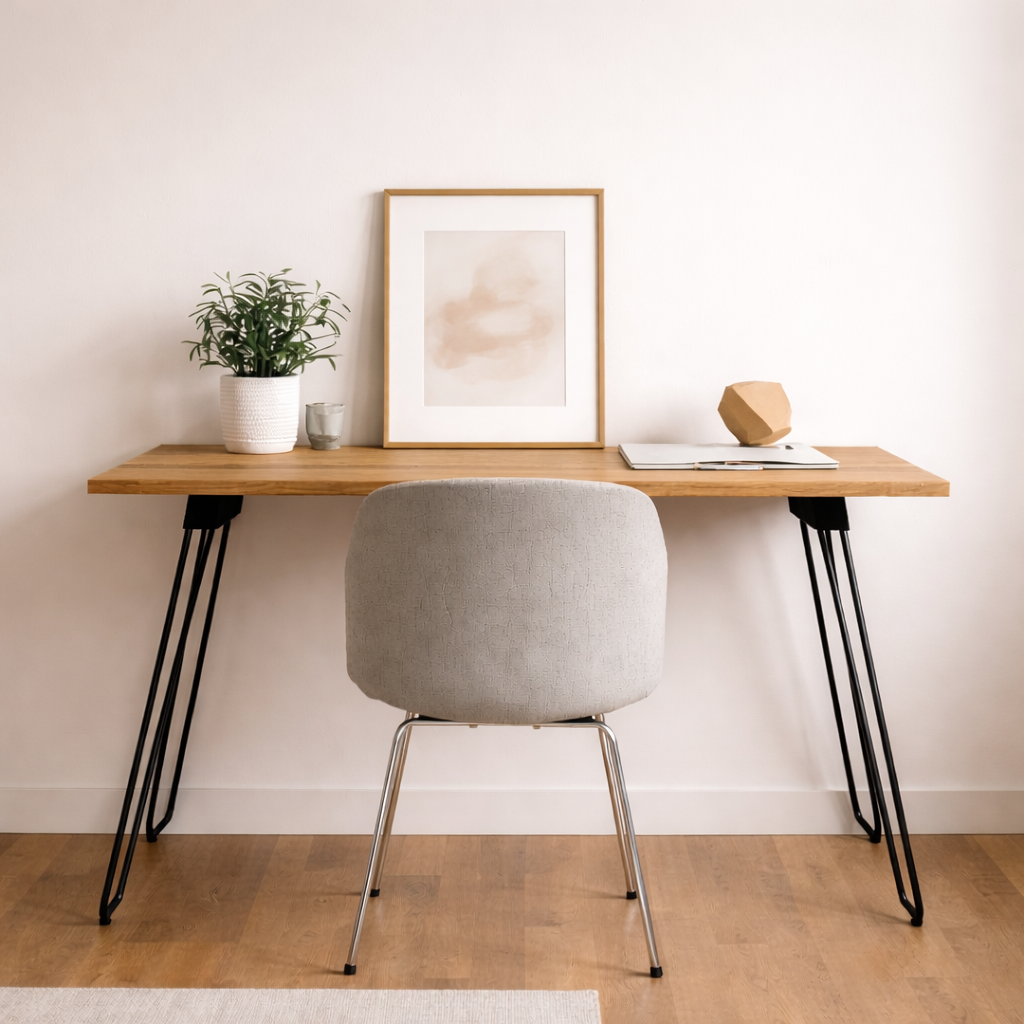
Common Misconceptions
“Minimalism is extreme.”
Minimalism improves focus through reduction, not deprivation.
“Clutter doesn’t affect me.”
Even when clutter feels normal, your brain continues processing it.
“Productivity tools matter more.”
Clarity matters more than tools.
Frequently Asked Questions
Does minimalism actually improve productivity?
Yes. Research in neuroscience and environmental psychology shows that reduced visual clutter lowers cognitive load and supports sustained attention.
How quickly can minimalism improve focus?
Many people report clearer thinking within days of removing excess from high-traffic surfaces.
Is this only relevant for home offices?
No. Kitchens, bedrooms and entryways also influence stress and decision fatigue.
Final Thoughts
Minimalism improves focus because it removes unnecessary mental demands.
It reduces visual competition.
It lowers stress.
It preserves decision-making capacity.
It stabilises attention.
When your environment becomes simpler, your cognition becomes sharper.
Focus is not created by adding more.
It is created by needing less.