
Table of Contents
Intentional Buying: How To Stop Over-consuming at Home
Most clutter doesn’t begin with storage problems.
It begins with purchasing decisions.
If you’ve already started to declutter your home, you may have realised something important: Clutter returns when buying habits don’t change.
Intentional buying is the missing layer in home minimalism. It prevents overconsumption before it enters your space.
What Is Intentional Buying?
Intentional purchasing involves choosing items based on function, durability and lifestyle fit, rather than impulse, emotion or passing trends.
It asks one simple question:
Does this improve how I live or does it simply add volume?
When purchases become intentional, homes stay calmer without constant decluttering.
Why We Over-consume at Home
Overconsumption rarely happens consciously.
Research found in the National Library of Medicine found that heightened stress significantly increases impulsive buying tendencies, particularly when individuals use spending as a way to regulate emotions. When purchasing becomes a coping mechanism rather than a functional decision, accumulation happens quickly and often without awareness.
When buying becomes emotional regulation, items accumulate faster than systems can support.
Intentional buying interrupts that cycle.
Step 1: Understand the Clutter-Consumption Cycle
The cycle often looks like this:
Stress → Purchase → Temporary relief → Accumulation → Stress
Research published in Environment and Behavior, a peer-reviewed journal in environmental psychology, shows that people often purchase items to regulate emotional discomfort rather than genuine need. The same body of research found that cluttered environments can increase feelings of chaos and promote more automatic consumption behaviours, reinforcing the cycle.
Without intentional buying, consumption becomes automatic.
Step 2: Replace Instead of Accumulate
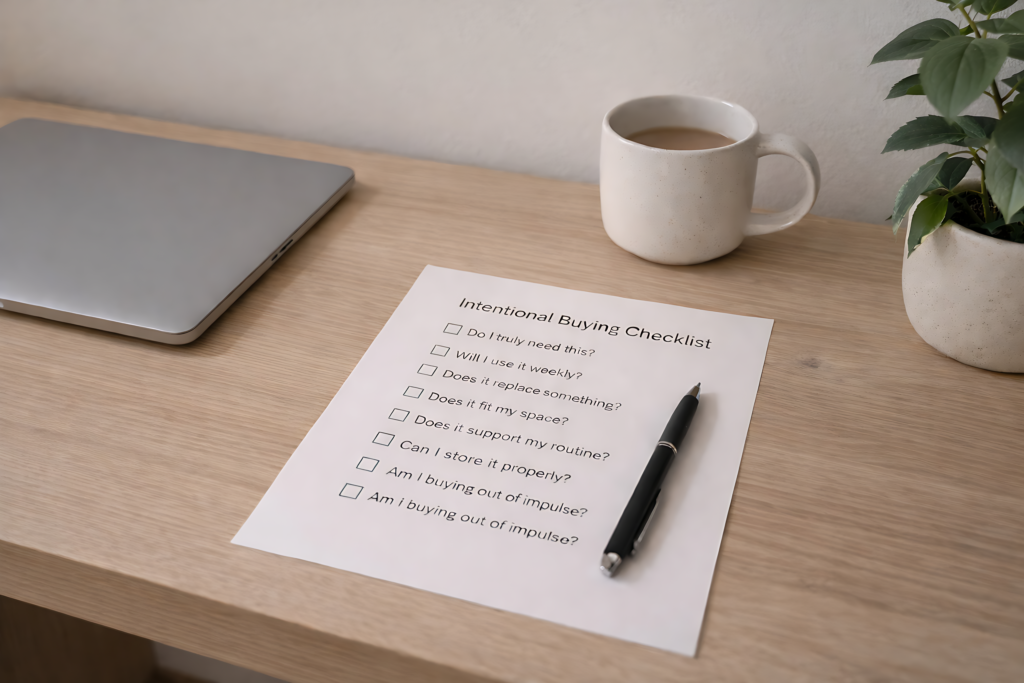
Before buying something new, ask:
- Does this replace something I already own?
- Will this reduce friction in my space?
- Is this aligned with how I actually live?
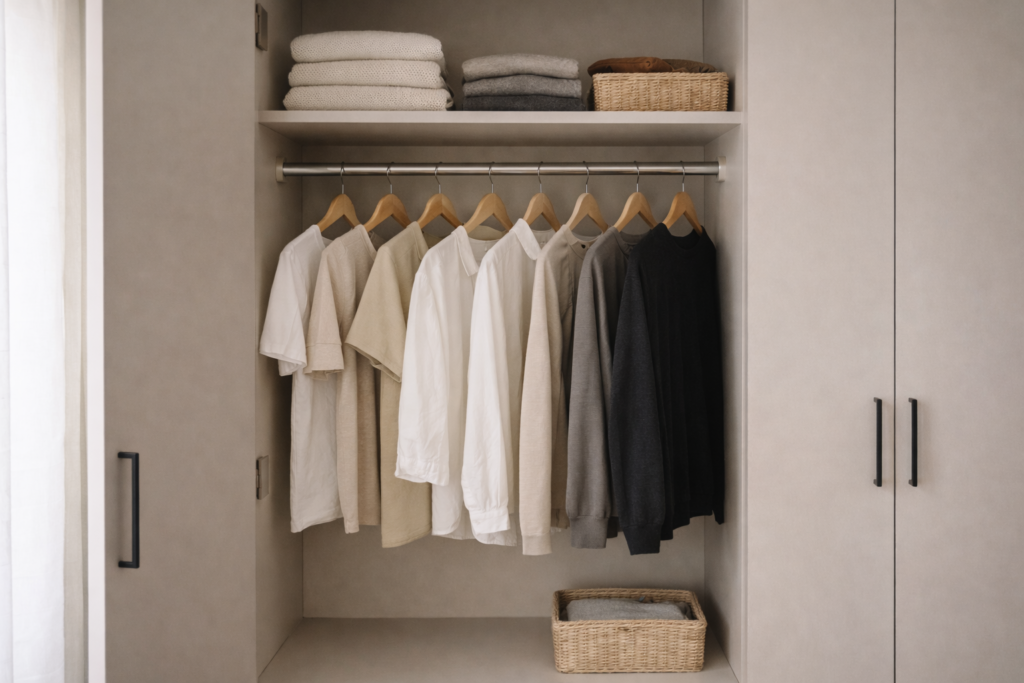
If the item does not improve functionality, it likely increases volume.
As discussed in Minimalist Storage Ideas That Actually Work, storage systems fail when volume exceeds capacity.
Intentional buying protects those systems.
Step 3: Use the 48-Hour Pause Rule
Impulse purchases lose urgency with time.
The 48-hour rule:
- Add the item to a list
- Wait two days
- Reassess actual need
When you introduce a delay between desire and action, it can reduce impulsive decision-making by allowing strong emotions to ease and considered judgment to return. Even short cooling-off periods significantly improve long-term decision quality. A practical breakdown of how a cooling-off period disrupts impulse buying further can be found here.
Intentional buying uses time to pause — not to restrict you, but to help you think
Step 4: Buy for Structure, Not Trends
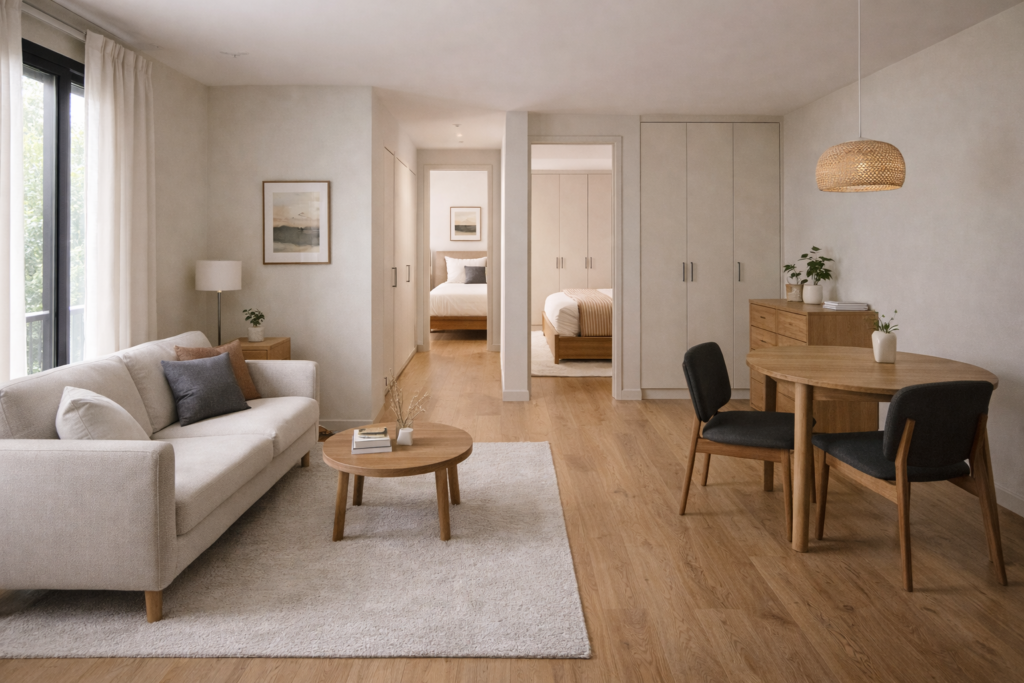
Small homes magnify poor purchasing decisions.
Before buying décor or furniture:
- Where will this live?
- Does it get in the way?
- Does it increase visual clutter?
- What will be removed if this is added?
Our guide on Minimalism for Small Spaces explains how layout mistakes compound quickly in apartments.
Intentional buying aligns purchases with structure.
Step 5: Reduce Exposure to Buying Triggers
Notifications, flash sales and constant browsing increase purchase frequency.
Research in consumer behaviour consistently demonstrates that environmental cues and digital prompts significantly influence purchasing decisions. A university study examining smartphone marketing found that push notifications can increase impulse buying by creating urgency and emotional pressure in consumers.
Reducing exposure — unsubscribing from emails, limiting browsing time, muting ads and disabling non-essential notifications strengthens intentional buying behaviour by removing unnecessary triggers.
Step 6: Evaluate the Storage Cost
Every purchase carries a hidden storage cost.
Ask:
- Where will this be stored?
- Does this require new containers?
- Will this increase cleaning time?
As explained in How To Declutter Your Home Without Regret, sustainable simplicity requires volume control.
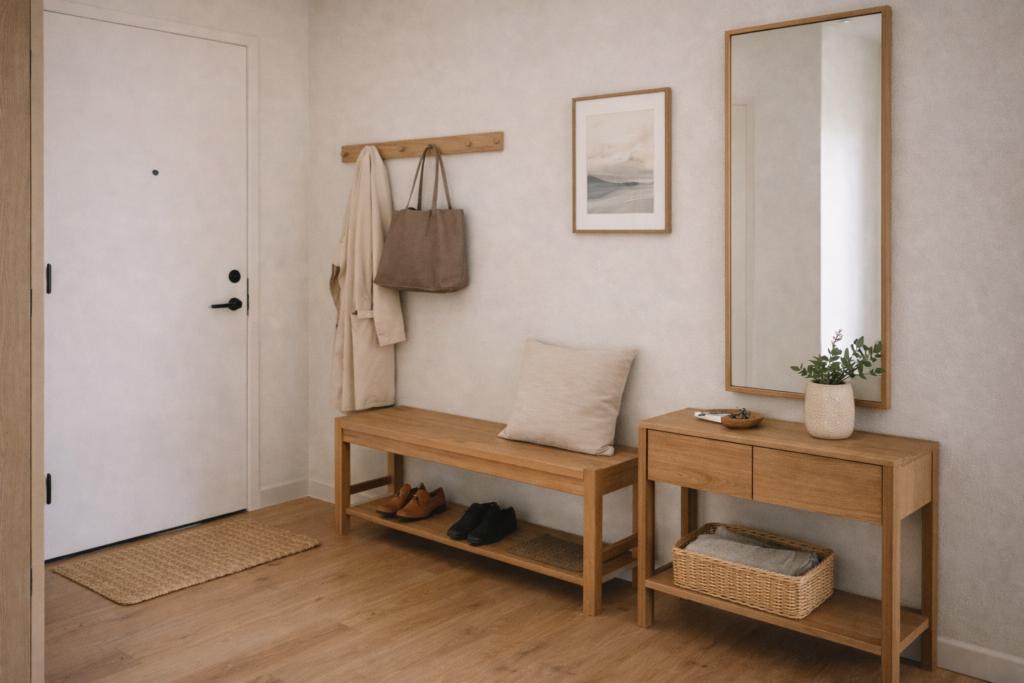
Intentional buying ensures your home stays manageable.
Common Intentional Buying Mistakes
Confusing Discipline with Deprivation
Intentional buying is alignment, not restriction.
Overcorrecting After Decluttering
Extreme no-buy rules often fail long term.
Buying Organising Products Instead of Reducing Volume
Storage should follow reduction.
Following Trends Instead of Needs
Trends expire. Function remains.
How Intentional Buying Supports Home Minimalism
When intentional buying becomes a habit:
- Clutter decreases naturally
- Storage systems remain functional
- Cleaning becomes easier
- Financial pressure reduces
- Decision fatigue lessens
Intentional buying strengthens the foundation outlined in Home Minimalism 101 because it prevents excess before it begins.
Frequently Asked Questions
What is intentional buying?
Intentional buying means evaluating purchases based on long-term function rather than impulse or trend.
How does intentional buying reduce clutter?
It prevents unnecessary items from entering your home.
Is intentional buying the same as a no-buy challenge?
No. It encourages thoughtful decisions rather than total restriction.
How do I start practicing intentional buying?
Pause before purchasing, evaluate storage impact and prioritise replacement over accumulation.
Final Thoughts
Clutter is rarely solved by better storage alone.
It is solved by better decisions.
Intentional buying transforms your home not by removing everything but by choosing carefully what enters.
When purchases become purposeful, simplicity becomes maintainable.