
Table of Contents
Small Home Office Setup Ideas for Apartments
Setting up a home office in an apartment can feel limiting. Space is tight, rooms serve multiple purposes and furniture is often more squished than in larger homes. But small spaces don’t have to compromise comfort or productivity.
With thoughtful planning, even a compact corner can become a workspace that feels intentional and supportive. In a complete home office setup guide, layout matters just as much as furniture. This article focuses on how to design a small home office that works efficiently without overwhelming your space.
Why Small Spaces Require Smarter Planning
In apartments, your workspace often shares space with living, dining or sleeping areas. Without planning, clutter builds quickly and visual noise increases.
Small spaces demand:
- Clear zoning
- Minimal but functional furniture
- Vertical storage use
- Intentional lighting
- Ergonomic efficiency
A compact setup should feel streamlined, not squeezed.
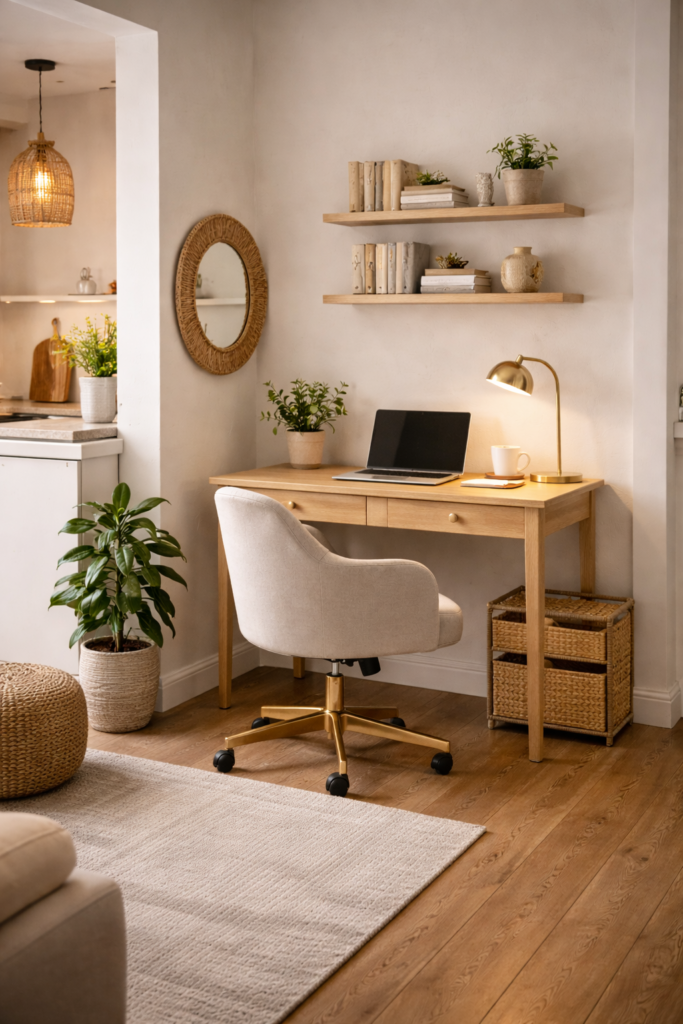
Start With Location, Not Furniture
Before choosing a desk or chair, identify where your workspace will live.
Common apartment options:
- Bedroom corner
- Living room wall
- Hallway nook
- Window alcove
- Dining table dual-use setup
Choose a location with:
- Access to natural light
- Enough wall depth for a desk
- Minimal foot traffic
- Access to power outlets
This decision determines everything else.
Choose the Right Desk for Small Spaces
Desks for apartments should prioritise footprint and proportion.
Look for:
- Shallow depth (but enough for screen distance)
- Slim legs to reduce visual bulk
- Open undersides for airflow and space
- Floating or wall-mounted designs
As explained in our guide to home office desks for small and large spaces, depth and width matter just as much as surface area. Oversized desks often make small rooms feel crowded rather than productive.
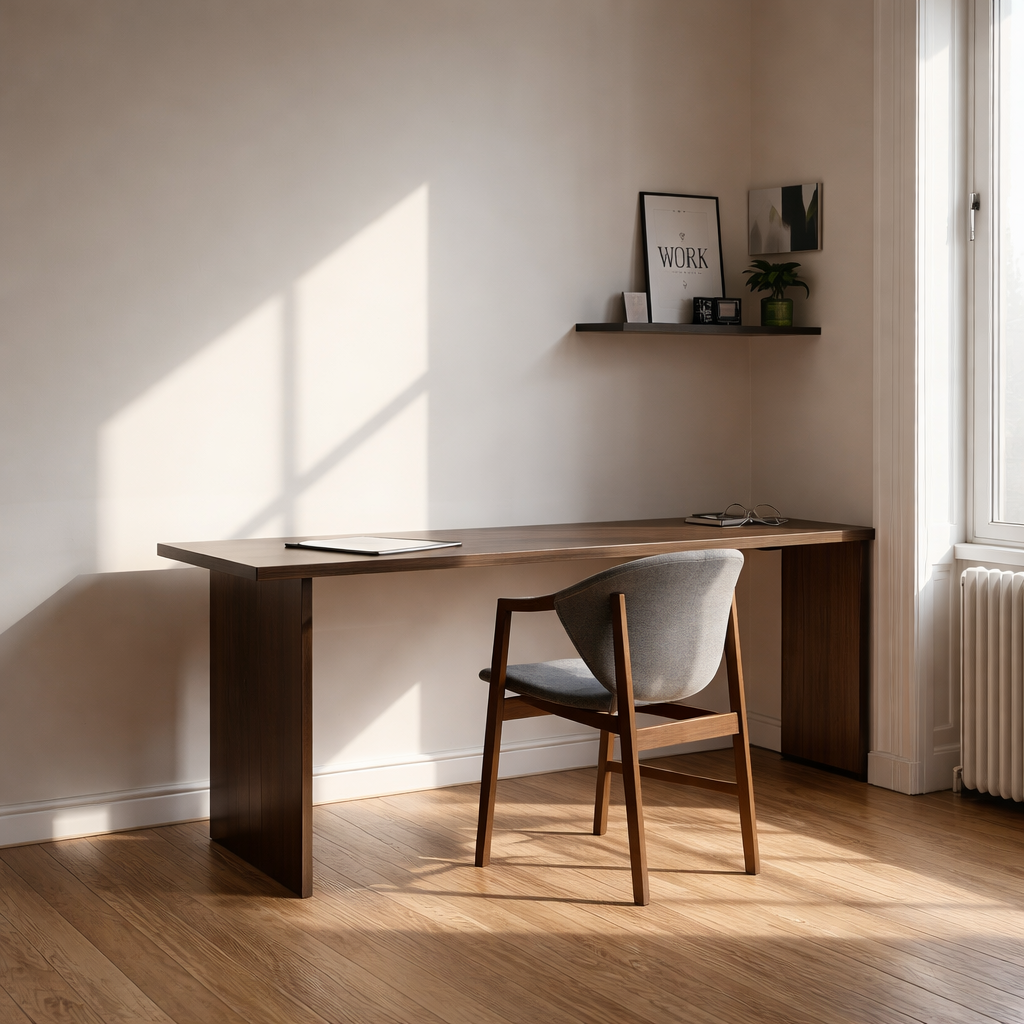
Seating Still Matters (Even in Tight Spaces)
It’s tempting to choose the smallest chair possible in a small room. But comfort should not be sacrificed.
A supportive chair should:
- Fit fully under the desk
- Support neutral posture
- Allow natural movement
- Not visually dominate the room
Even compact setups benefit from proper ergonomics. Our article on ergonomic office chairs for home offices explains how seating directly affects long-term comfort and posture.
According to the Occupational Safety and Health Administration (OSHA), workstation components (including chair and desk height) must align to maintain neutral posture and reduce strain during desk work.
Even in small spaces, ergonomic alignment remains essential.
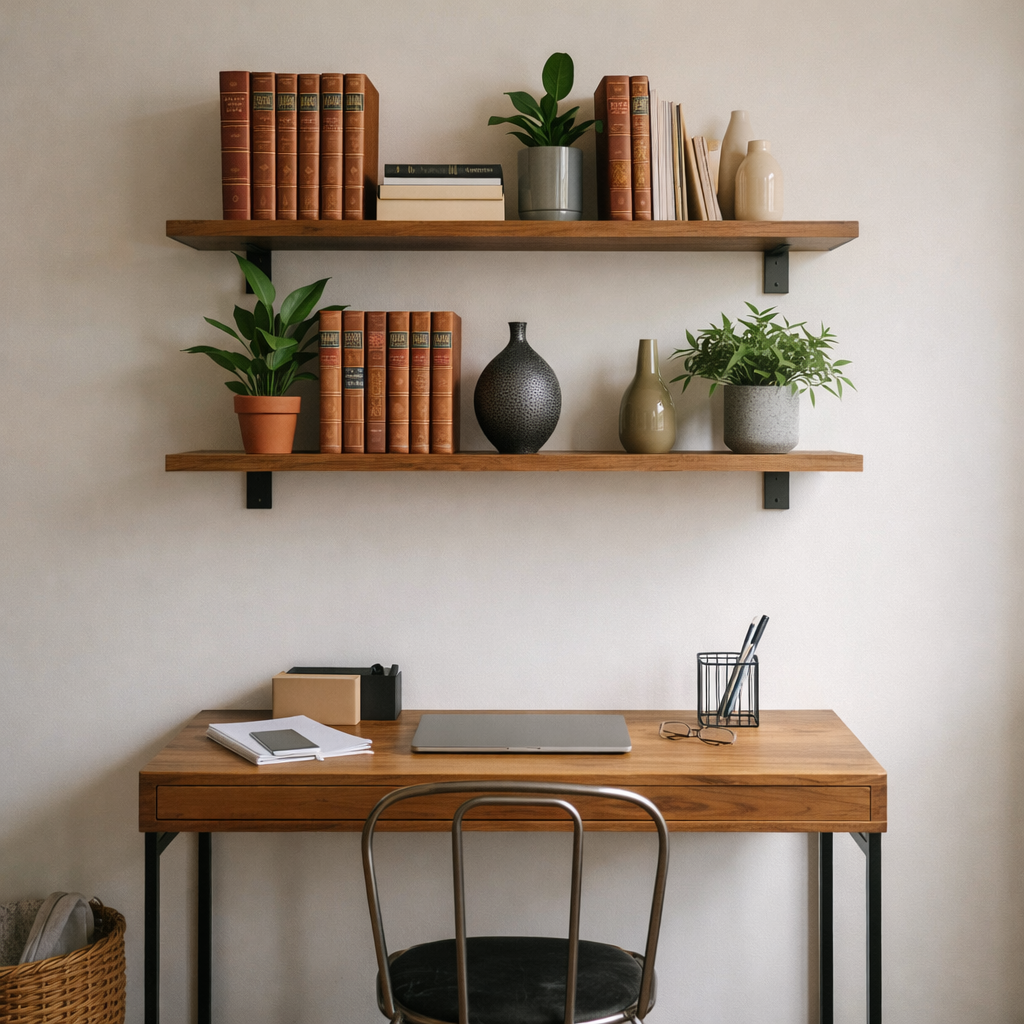
Use Vertical Space Intentionally
When floor space is limited, walls become valuable.
Consider:
- Floating shelves
- Pegboards
- Wall-mounted organisers
- Narrow bookcases
- Above-desk storage
Vertical storage keeps surfaces clear and reduces visual clutter, which supports focus and mental clarity.
Lighting Is Critical in Apartments
Small rooms often rely on overhead lighting, which creates glare and shadow. Adding a desk lamp improves visual comfort and depth.
As discussed in our guide to the best desk lamps for home offices, layered lighting, combining ambient and task lighting reduces eye strain and improves focus.
The Cleveland Clinic notes that glare and poor lighting conditions contribute to digital eye strain during prolonged screen use.
Proper task lighting can make even a small workspace feel more balanced and comfortable.
Define Your Workspace Visually
In apartments, visual separation matters as much as physical separation.
You can create subtle zoning with:
- A small rug
- A different wall colour
- A lamp with distinct warmth
- A bookshelf acting as divider
- Curtains or folding screens
This signals to your brain that the area has a specific purpose.
Common Mistakes in Small Home Office Setups
Avoid:
- Oversized desks
- Bulky storage units
- Ignoring cable management
- Using dining chairs long-term
- Letting work materials spill into living areas
Small spaces magnify clutter quickly.
How Small Spaces Can Still Support Focus
Compact environments can actually reduce distraction when designed intentionally.
When your desk, chair and lighting are aligned properly, the limited space becomes structured rather than restrictive.
This is why small layouts still follow the same principles outlined in the home office setup guide — ergonomics, lighting balance and system thinking remain the foundation regardless of square footage.
Frequently Asked Questions
What is the best desk size for a small apartment?
A desk around 102-122cm (40–48 inches) wide with sufficient depth for a monitor works well in most apartments. Always measure the space including chair clearance.
Can I create a home office in a bedroom?
Yes. Use visual separation techniques such as rugs or lighting changes to mentally distinguish workspace from rest areas.
Are floating desks good for small spaces?
Yes. Wall-mounted desks reduce visual bulk and free up floor space, making rooms feel more open.
How do I prevent clutter in a small home office?
Use vertical storage, limit surface items to essentials and clear your desk at the end of each workday.
Do I need an ergonomic chair in a small apartment?
Yes. Even compact spaces require proper posture support to prevent discomfort and fatigue.
Final Thoughts
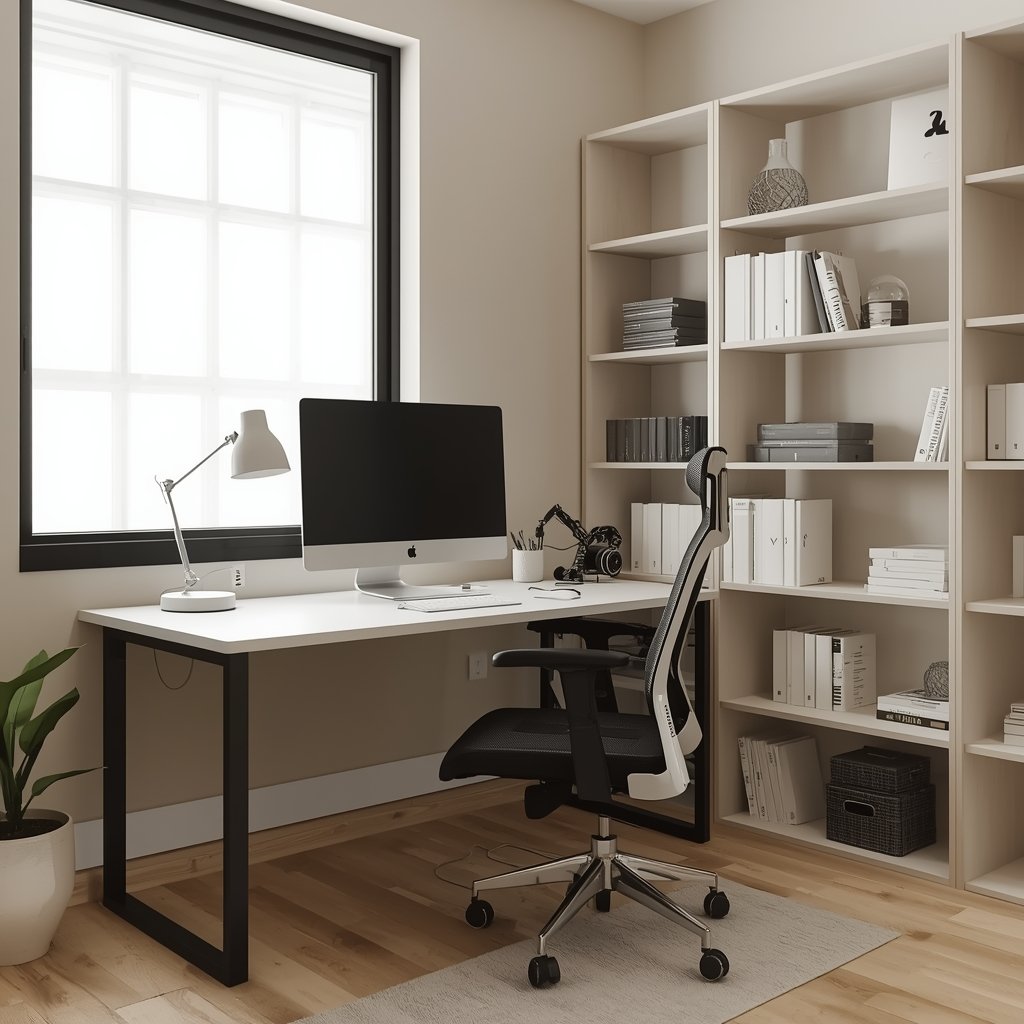
Small home offices don’t need to feel temporary or improvised. With thoughtful planning, compact setups can be just as supportive and productive as larger rooms.
By prioritising proportion, ergonomics, lighting and intentional storage, you can create a workspace that feels purposeful — even within limited square footage.
Size doesn’t determine effectiveness. Design does.