
Table of Contents
Home Office Desks for Small and Large Spaces: How to Choose the Right Fit
Choosing the right home office desk can make the difference between a workspace that feels effortless and one that quietly works against you. A desk that’s too large can overwhelm a room, while one that’s too small can limit comfort, organisation and focus.
This guide breaks down how to choose a home office desk that fits both your space and the way you work. Whether you’re setting up in a small apartment or designing a dedicated office, the goal is the same: A desk that supports comfort, productivity and long-term use.
If you’re building your workspace step by step, this article works alongside a complete home office setup guide, where desks, chairs, lighting and layout are considered together rather than in isolation.
Why Your Desk Matters More Than You Think
A desk isn’t just a surface — it’s the centre of your entire workspace. Desk size, height and layout affect posture, movement and how easily you can stay organised throughout the day.
In a well-planned home office setup, the desk determines:
- How your chair fits underneath
- Where your screen sits in relation to your eyes
- How much space you have to work comfortably
- Whether clutter builds up quickly or stays contained
A poorly chosen desk often leads to awkward posture, cramped movement and constant adjustments that break focus.
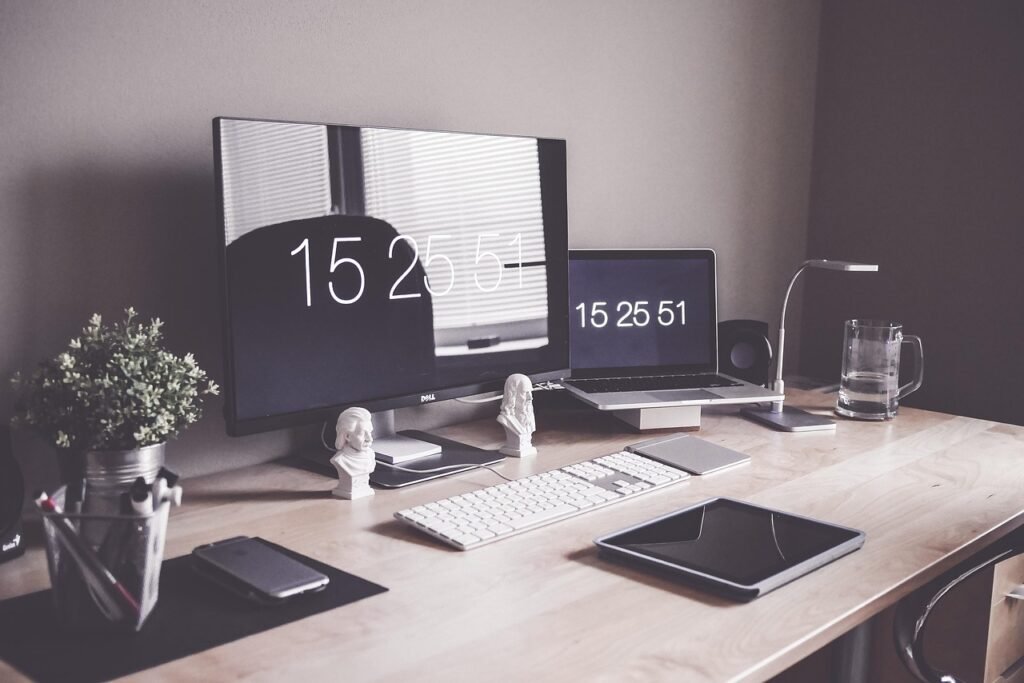
Start With the Space You Actually Have
Before looking at desk styles or layouts, start with the physical space available.
Measure:
- Wall width
- Depth available once a chair is pulled out
- Clearance for movement around the desk
Many people underestimate how much space a chair needs when in use. A desk that technically “fits” against a wall may feel cramped once you’re seated and moving naturally.
Choosing a Desk for Small Spaces
Small spaces don’t require sacrificing comfort, they require smarter choices.
What Works Well in Small Home Offices
- Slim or shallow desks with enough depth for a screen
- Wall-mounted or floating desks
- Compact writing desks with minimal storage
- Desks that double as console tables when not in use
The key is prioritising a functional desk layout, not size alone. A well-designed compact desk can feel more comfortable than a large desk squeezed into a tight room.
These principles pair naturally with small home office setup ideas for apartments, where layout and desk optimisation matter as much as furniture selection.
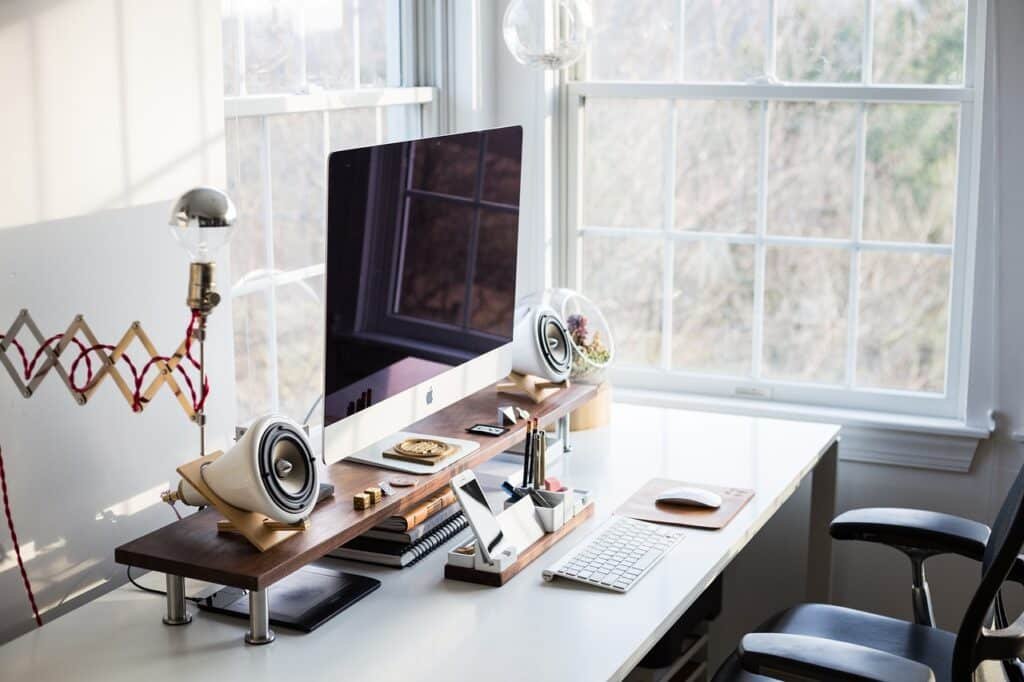
Choosing a Desk for Larger Spaces
Larger rooms offer flexibility but bigger isn’t always better.
What to Consider in Larger Home Offices
- Desk depth that allows comfortable screen distance
- Space for secondary tasks (writing, planning, reading)
- Whether storage is built-in or separate
- How the desk fits into the overall room layout
In larger spaces, desks often act as a visual centrepiece. Choosing one that balances function with proportion helps the room feel intentional rather than overfilled. The best home office desk promotes efficiency and organisation.
Desk Height and Ergonomics
Choosing a sturdy home office desk is crucial for long-term use.
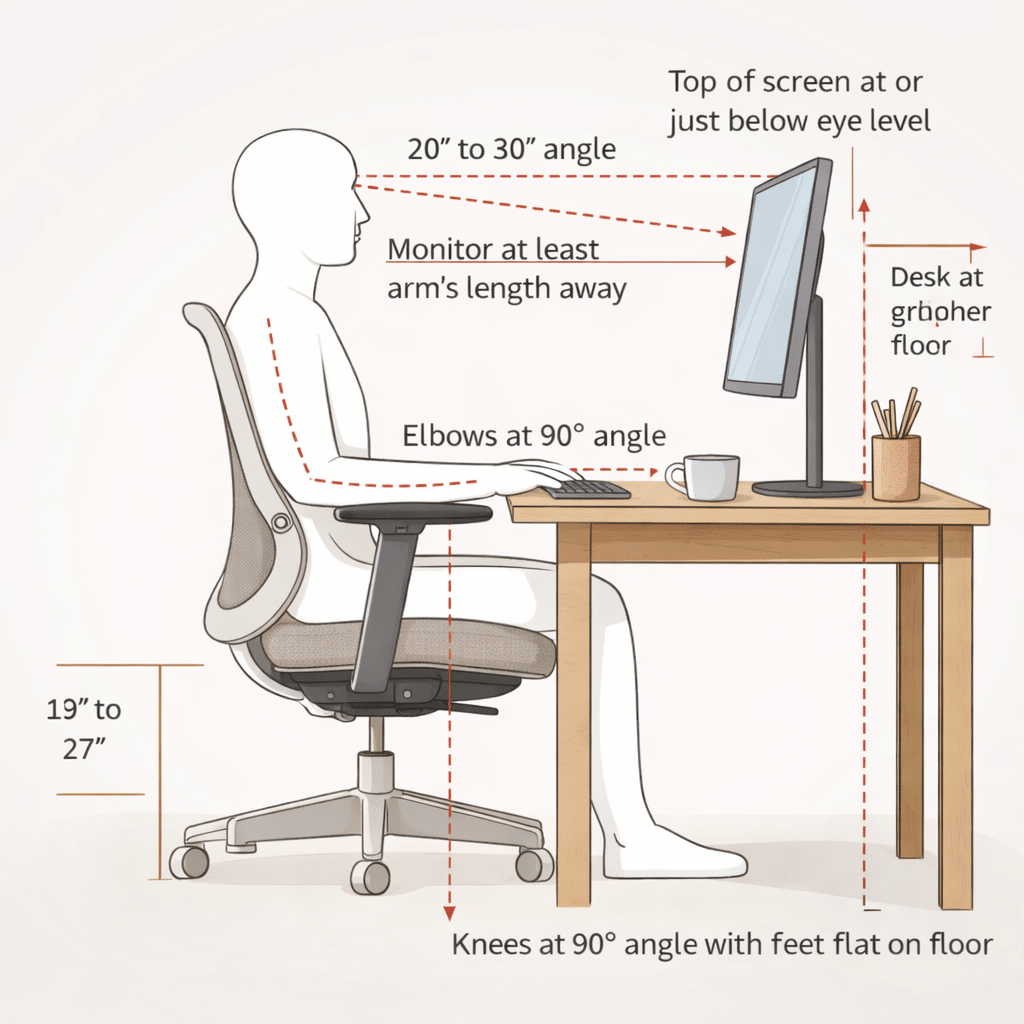
Desk height plays a major role in comfort and posture. A desk that’s too high or too low can lead to wrist strain, shoulder tension and neck discomfort over time.
According to guidance from the Occupational Safety and Health Administration (OSHA), proper workstation ergonomics depend on aligning desk height, chair height and screen position to maintain neutral posture during desk-based work.
This is why desk choice should never be separated from seating. A desk and chair must work together as a system.
Desk Depth, Width, and Surface Area
Desk dimensions matter just as much as height.
Depth
Depth affects how far your screen sits from your eyes. Too shallow and screens are pushed too close. Too deep and space can be wasted.
Width
Width determines how much lateral movement you have. Even a minimalist setup benefits from enough width to rest your arms comfortably.
Surface Use
Be realistic about what you use daily. A cluttered desk often indicates poor layout rather than too little space.
Desk Types and How They Affect Workflow
Different desk styles support different ways of working.
Common desk types include:
- Writing desks for minimal setups
- Computer desks with cable management
- Standing or sit-stand desks for movement
- L-shaped desks for multitasking
- Adjustable desks for shared workspaces
Understanding how you work day to day helps narrow these options. This ties closely to designing a home office around your work style, where furniture choices support habits rather than force new ones.
Desk and Chair Compatibility
Even the best desk won’t feel comfortable if it doesn’t align with your chair.
A mismatch can cause:
- Wrists bending upward while typing
- Shoulders lifting unnaturally
- Limited leg movement
- Pressure on hips or thighs
This is why desks are often discussed alongside ergonomic office chairs for home offices, not as standalone purchases.
Storage: Built-In or Separate?
Storage can either support focus or contribute to clutter.
Built-In Storage
- Keeps essentials close
- Reduces the need for extra furniture
- Can feel bulky in small rooms
Separate Storage
- Keeps the desk visually lighter
- Allows flexible layout changes
- Encourages intentional organisation
Effective storage solutions enhance your home office desk experience.
There’s no universal answer, the right choice depends on your space and workflow.
Common Desk Mistakes to Avoid
Many desk issues come from decisions made too quickly.
Common mistakes include:
- Choosing a desk based on appearance alone
- Ignoring chair clearance
- Overestimating how much storage is needed
- Underestimating depth requirements
- Forgetting cable management entirely
Avoiding these early prevents frustration later.
How the Right Desk Supports Focus
Comfort and focus are closely linked. When your desk supports good posture and efficient movement, your brain spends less energy compensating for discomfort.
Research summarised by the U.S. National Institute for Occupational Safety and Health (NIOSH) shows that well-designed workstations reduce physical strain and support sustained task performance during desk work.
Frequently Asked Questions
What size desk is best for a home office?
The best desk size depends on both available space and how you work. Small home offices often benefit from compact desks with efficient surface area, while larger rooms can accommodate wider desks with additional storage or workspace. Always measure your space first and account for chair movement and clearance.
What is the standard height of a home office desk?
Most standard desks are approximately 71–76 cm (28–30 inches) high. However, the ideal height depends on your chair and body proportions. Your elbows should rest at roughly a 90-degree angle while typing to maintain neutral posture.
How much depth does a desk need?
A desk should generally have at least 60cm (24 inches) of depth to comfortably accommodate a monitor and keyboard. Shallower desks may push screens too close to your eyes, while deeper desks allow better positioning flexibility.
Are larger desks better for productivity?
Not necessarily. A desk that is too large can encourage clutter, while one that is too small can restrict movement. The best desk size supports your workflow without overwhelming the room.
Should I choose a desk with built-in storage?
Built-in storage can reduce the need for additional furniture but it may make the desk feel heavier in smaller rooms. Separate storage can provide flexibility. The right choice depends on your space and organisational habits.
How This Fits Into Your Overall Home Office Setup
A desk is one part of a larger system. For best results, desk selection should work alongside seating, lighting, screen placement and room layout.
That’s why this guide is designed to support a complete home office setup guide, where every element works together to create a workspace that feels comfortable, functional and sustainable.
Final Thoughts: Choose for Function First
The right home office desk isn’t defined by size or style, it’s defined by how well it supports the way you work.
When your desk fits your space, aligns with your chair and gives you room to work comfortably, everything else becomes easier. Focus lasts longer, clutter stays manageable and work feels less demanding.
This guide gives you the foundation to choose a desk that supports you now and adapts with you over time.